


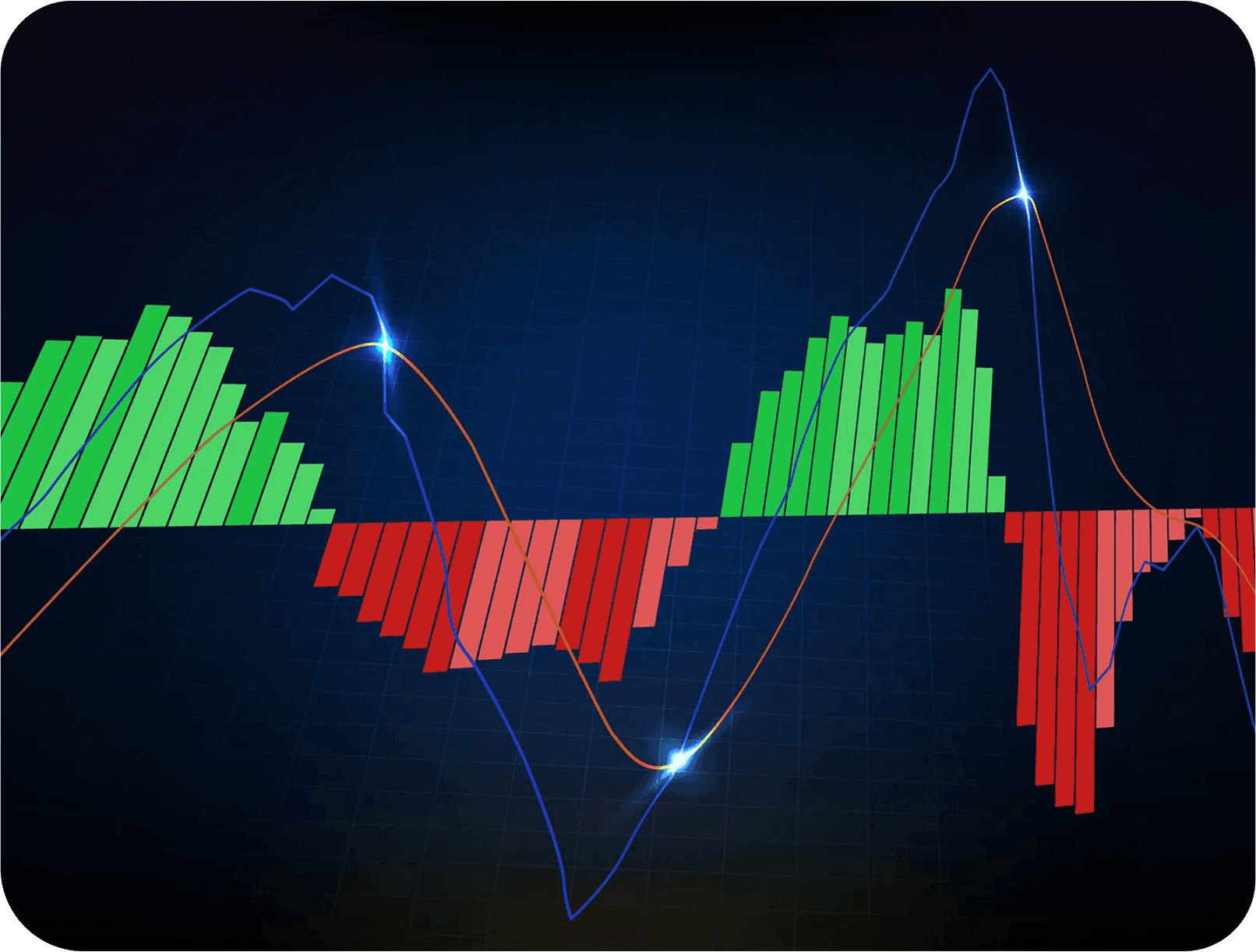
The Moving Average Convergence Divergence (MACD) is a versatile indicator that combines trend-following and momentum characteristics. Developed by Gerald Appel, it helps identify trend changes, momentum shifts, and potential entry and exit points.
Indicator Components
The MACD line is calculated by subtracting a 26-period EMA from a 12-period EMA. When the MACD line is above zero, it suggests the 12-period EMA is above the 26-period EMA, indicating bullish momentum. When below zero, it suggests bearish momentum.
The signal line is a 9-period EMA of the MACD line. Crossovers between the MACD line and signal line generate trading signals. When the MACD line crosses above the signal line, it's considered bullish. When it crosses below, it's considered bearish.
The histogram represents the difference between the MACD line and signal line. When the histogram is positive and expanding, it indicates strengthening bullish momentum. When negative and expanding, it indicates strengthening bearish momentum. A shrinking histogram suggests weakening momentum, potentially signaling a trend change.
Advanced Techniques
Divergence trading involves comparing MACD movements to price movements. Bullish divergence occurs when price makes lower lows while MACD makes higher lows, suggesting weakening downward momentum. Bearish divergence occurs when price makes higher highs while MACD makes lower highs, suggesting weakening upward momentum.
Signal line crossovers are the most common MACD signals. However, in ranging markets, these can produce false signals. Traders often wait for crossovers that occur when MACD is above or below the zero line, or combine MACD signals with other technical analysis tools for confirmation.
Histogram analysis can provide early warning signals. When the histogram begins to shrink after a strong move, it suggests momentum is waning, potentially signaling a trend change. A histogram that crosses the zero line confirms the MACD/signal line crossover and can provide additional confirmation.