


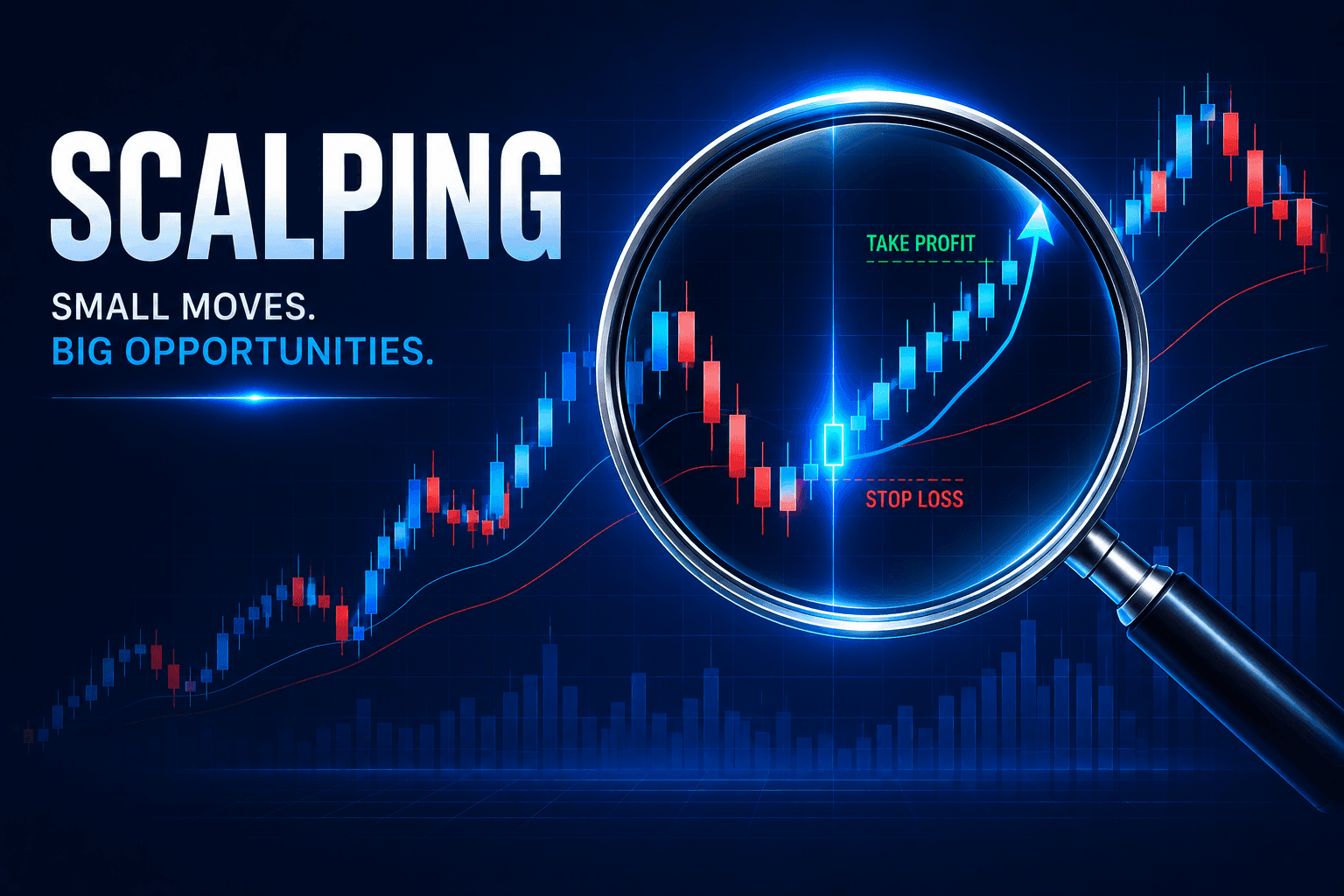
In the fast-paced world of forex and CFD trading, few styles are as dynamic or demanding as scalping. For traders who thrive on adrenaline and quick decision-making, scalping offers the potential to turn small market movements into significant opportunities. However, it requires precision, discipline, and the right strategic approach.
In this guide, we will explore the fundamentals of scalping, the essential tools you need to succeed, and specific strategies used by professionals. Whether you are a beginner looking to understand the basics or an experienced trader refining your technique, this listicle provides the knowledge you need to trade with confidence.
1. Introduction to Scalping: Definition and Basic Principles
Scalping is a trading style that specialises in profiting off small price changes. Unlike swing trading or day trading, where positions might be held for hours or days, scalpers typically hold positions for just a few seconds to a few minutes.
The core principle is simple: it is often easier to catch very small price moves than large ones. Scalpers aim to accumulate many small profits throughout the day that, when combined, add up to a substantial gain. To be successful, a scalper needs a strict exit strategy, as one large loss could wipe out the many small gains obtained.
2. Essential Tools for Scalping: Platforms, Charts, and Indicators
Because scalping relies on speed and precision, your technical setup is your lifeline. A delay of even a few seconds can turn a profitable trade into a loss.
-
Robust Trading Platforms: You need a platform that offers lightning-fast execution speeds. My Maa Markets offers the industry-standard MetaTrader 5 (MT5), known for its advanced charting capabilities and stability during high volatility.
-
Live Market Analytics: Scalpers rely heavily on technical analysis. You need real-time data feeds and access to varied timeframes, particularly the 1-minute (M1) and 5-minute (M5) charts.
-
Technical Indicators: Speed is essential, so visual indicators that provide clear entry and exit signals are preferred. Common tools include Moving Averages, the Relative Strength Index (RSI), and Bollinger Bands.
3. Top Scalping Strategies
Successful scalping is rarely about guessing; it is about following a system. Here are highly effective methods used by traders globally:
-
Stochastic Oscillator Strategy: This strategy identifies overbought and oversold conditions. Traders look for the Stochastic lines to cross in overbought (above 80) or oversold (below 20) areas to signal a potential reversal, allowing for a quick entry and exit.
-
Moving Average Crossover: This involves using two Moving Averages (MA)—one short-term (e.g., 5-period) and one long-term (e.g., 20-period). A buy signal is generated when the short-term MA crosses above the long-term MA, and a sell signal occurs when it crosses below.
-
Bollinger Band Scalping: In ranging markets, prices often bounce between the upper and lower Bollinger Bands. Scalpers buy when the price touches the lower band and sell when it touches the upper band, capitalizing on the mean reversion.
4. Risk Management in Scalping
Risk management is the backbone of any trading strategy, but in scalping, it is non-negotiable. Because you are executing a high volume of trades, the cost of trading and the risk of slippage are factors you must manage.
-
Stop-Loss Orders: Always use a tight stop-loss. This ensures that if the market moves against you, your losses are capped immediately.
-
Leverage with Care: While My Maa Markets offers extensive leverage up to 1:500, it is vital to remember that CFDs and Margin FX are leveraged products that carry a high level of risk to your capital. Leverage magnifies both profits and losses.
-
Risk/Reward Ratio: Even though scalping targets small profits, your potential reward on each trade should justify the risk taken.
5. Psychology of a Scalper
The mental aspect of scalping is often harder than the technical side. Decisions must be made in milliseconds, leaving no room for hesitation or regret.
-
Discipline: You must stick to your plan. If a trade hits your stop-loss, accept it and move on.
-
Emotional Control: Fear and greed are a scalper's worst enemies. 'Revenge trading' (trying to win back losses quickly) often leads to bigger losses.
-
Focus: Scalping requires intense concentration. It is not a "set and forget" strategy; you must be glued to the screen during your trading session.
6. Pros and Cons of Scalping
Is scalping right for you? Weighing the advantages against the challenges is crucial.
Pros:
-
Quick Results: Positions are closed quickly, realizing profits (or losses) immediately.
-
Less Exposure to Overnight Risk: Since scalpers close all positions before the end of the day, they avoid the risk of overnight market gaps.
-
Trading Opportunities: Small market moves happen constantly, providing abundant opportunities even in quiet markets.
Cons:
-
High Transaction Costs: Frequent trading means paying the spread more often, which can eat into profits.
-
High Stress: The need for constant focus and quick decisions can be mentally exhausting.
-
Requires Experience: It can be difficult for beginners to manage the speed and emotional discipline required.
7. Scalping with My Maa Markets
Choosing the right broker is critical for scalpers because transaction costs (spreads) are the primary expense. My Maa Markets is tailored to support high-frequency strategies:
-
Tight Spreads: We offer spreads starting from 0.0 pips. In scalping, where targets are small, tight spreads are essential to retaining profit.
-
Zero Commissions: Our Standard and Trader accounts offer $0 commission trading, helping you keep costs low.
-
Fast Execution: Our robust infrastructure ensures your trades are executed at the price you want, minimising slippage.
-
Extensive Leverage: Access leverage up to 1:500 to maximise your trading potential (while managing risk responsibly).
8. Regulatory Considerations
Safety should always be your priority. Trading with a regulated broker ensures that your funds are segregated and that you are trading in a fair environment.
My Maa Markets is regulated by the Financial Services Commission (FSC). This regulatory oversight provides transparency and security, allowing you to focus on the markets knowing your capital is handled with the highest standards of safety.
9. Conclusion
Scalping is a powerful strategy for those who can master the technical tools and maintain the necessary discipline. By utilising robust platforms, adhering to strict risk management rules, and choosing a broker with low spreads and high execution speeds, you position yourself for success in the global markets.
Ready to test your scalping strategy? Open an account with My Maa Markets today and trade with a partner committed to your success.
Risk Disclaimer: CFDs and Margin Fx are leveraged products carry a high level or risk to your capital. Trading is not suitable for everyone and may result in you losing substantially more than your initial investment. You do not own, or have any right to the underlying assets. You should only trade with money you can afford to lose.