


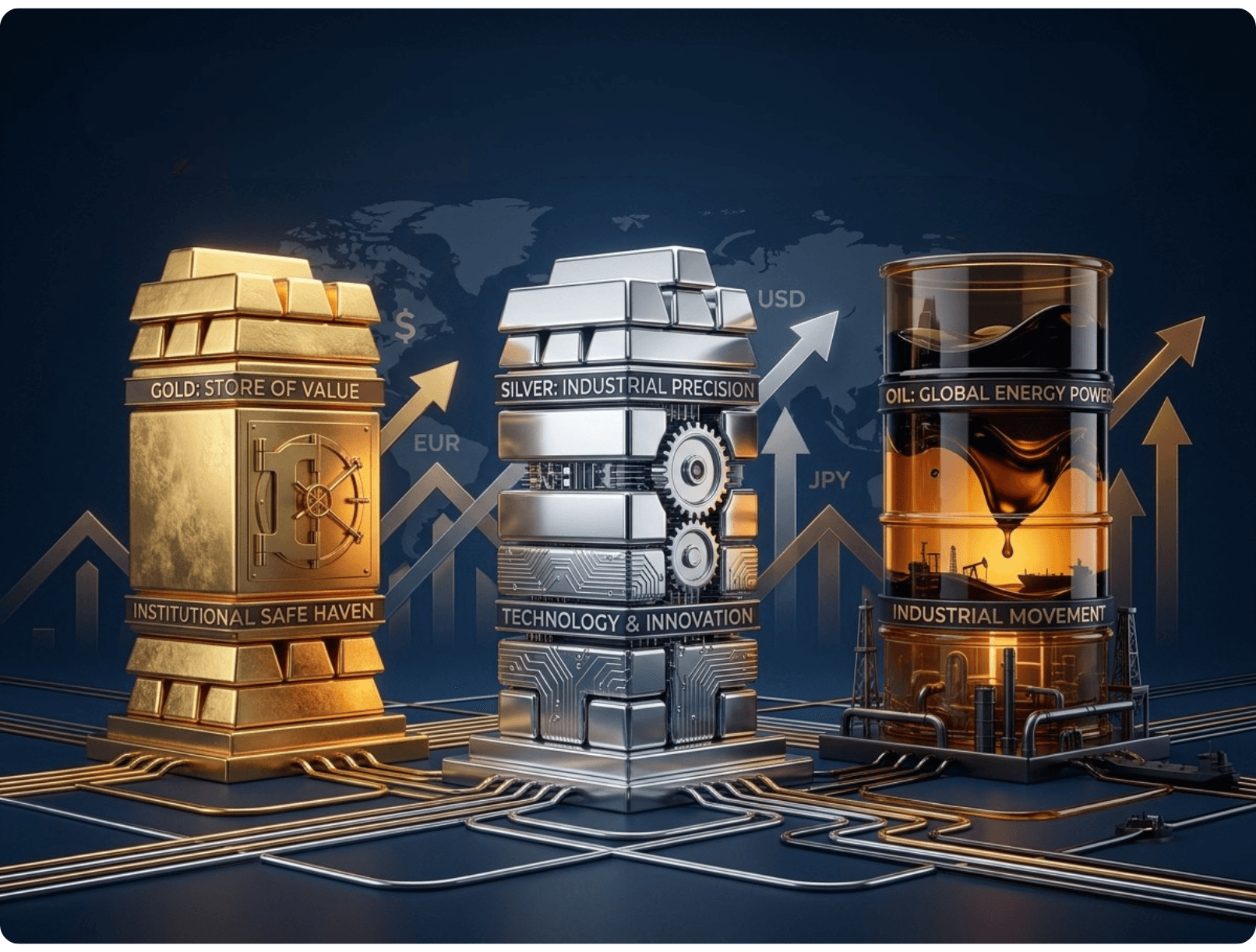
Commodities trading offers an essential pathway to portfolio diversification that many investors overlook. While stocks and bonds dominate most portfolios, physical goods like gold, silver, and oil present unique opportunities to hedge against inflation and market volatility. This comprehensive guide will equip you with the knowledge needed to begin your commodities trading journey with confidence.
Understanding how to trade these fundamental assets can provide stability during economic uncertainty and open doors to profit from global supply and demand dynamics. Whether you're seeking to protect your wealth or capitalize on market movements, commodities trading deserves serious consideration in your investment strategy.
What Are Commodities and Why Trade Them?
Commodities represent raw materials and primary agricultural products that can be bought and sold. These tangible assets fall into several categories: precious metals (gold, silver, platinum), energy products (crude oil, natural gas), and agricultural goods (wheat, corn, soybeans). Unlike stocks or bonds, commodities derive their value from actual physical goods with real-world applications.
The history of commodities trading spans centuries, beginning with agricultural exchanges where farmers would sell future harvests to secure predictable income. The Chicago Board of Trade, established in 1848, formalized this practice and created the foundation for modern futures markets. Today's electronic trading platforms have transformed these ancient practices into sophisticated financial instruments accessible to individual traders worldwide.
Trading commodities offers several compelling advantages for modern investors. Diversification benefits emerge because commodity prices often move independently of traditional stock and bond markets. During periods of stock market decline, certain commodities may actually increase in value, providing portfolio protection. Inflation hedging represents another crucial benefit, as commodity prices typically rise alongside general price levels, preserving purchasing power when currency values decline.
Market volatility in commodities creates opportunities for skilled traders to profit from price fluctuations. Global events, weather patterns, and geopolitical tensions can cause rapid price movements, presenting both risks and rewards for active traders.
Essential Commodities: Gold, Silver, and Oil
Gold: The Ultimate Store of Value
Gold has maintained its status as a store of value for over 4,000 years. Central banks worldwide hold approximately 35,000 tonnes of gold reserves, demonstrating institutional confidence in this precious metal. Beyond jewelry and investment purposes, gold serves critical roles in electronics, dentistry, and aerospace applications.
Several factors influence gold prices significantly. Economic uncertainty typically drives investors toward gold as a safe haven asset. During the 2008 financial crisis, gold prices surged from $800 to over $1,900 per ounce as investors sought stability. Currency fluctuations also impact gold pricing, particularly movements in the U.S. dollar, since gold is primarily priced in dollars globally.
Interest rate changes affect gold's attractiveness relative to yield-bearing assets. When interest rates fall, gold becomes more appealing since it doesn't pay dividends or interest. Geopolitical tensions create additional demand for gold as a hedge against political instability and conflict.
Silver: Industrial Demand Meets Investment Appeal
Silver combines investment appeal with substantial industrial utility. Approximately 50% of silver demand comes from industrial applications, including electronics, solar panels, medical devices, and water purification systems. This industrial demand creates different price dynamics compared to gold's primarily investment-driven market.
Industrial consumption patterns heavily influence silver prices. The growing renewable energy sector, particularly solar panel manufacturing, has increased silver demand significantly. Technological advances in electronics and medical applications continue expanding silver's industrial uses.
Supply constraints affect silver markets differently than gold. Silver mining often occurs as a byproduct of other metal extraction, making supply less responsive to price changes. Investment demand for silver tends to be more volatile than gold, creating larger price swings and trading opportunities.
Oil: The Energy That Powers the World
Crude oil remains the world's most actively traded commodity, with daily global consumption exceeding 100 million barrels. Two primary oil benchmarks dominate international markets: Brent crude (sourced from the North Sea) and West Texas Intermediate (WTI, sourced from U.S. fields). Brent crude typically trades at a premium to WTI due to quality differences and transportation costs.
Supply and demand fundamentals drive oil price movements. OPEC production decisions, U.S. shale oil output, and global economic growth rates all influence supply and demand balances. Geopolitical events in oil-producing regions can cause dramatic price spikes, as seen during various Middle Eastern conflicts.
Seasonal patterns affect oil demand, with heating oil demand peaking during winter months and gasoline demand rising during summer driving seasons. Economic indicators such as manufacturing output and transportation activity provide insights into future oil demand trends.
Getting Started with Commodities Trading
Choosing the Right Broker
Selecting a proper broker forms the foundation of successful commodities trading. Regulatory oversight should be your primary concern when evaluating brokers. Look for firms regulated by recognized financial authorities like the FSC (Financial Services Commission), which ensures adherence to strict operational and financial standards.
Competitive spreads directly impact your trading costs and potential profits. Premium brokers offer spreads starting from 0.0 pips, while maintaining reliable execution during volatile market conditions. Leverage options allow you to control larger positions with smaller capital amounts, though this amplifies both potential profits and losses. Many regulated brokers provide leverage up to 1:500, requiring careful risk management.
Asset selection determines your trading opportunities. Choose brokers offering comprehensive access to major commodities markets, including spot metals, energy futures, and agricultural products. Platforms like My Maa Markets provide 275+ trading instruments across four asset classes, ensuring diverse trading opportunities.
Opening Your Trading Account
Modern account opening procedures have streamlined significantly, with most reputable brokers completing the process within minutes. Identity verification requires government-issued identification and proof of residence. Financial suitability assessments ensure you understand trading risks and have appropriate financial resources.
Account types typically range from beginner-friendly options to institutional-grade accounts. Standard accounts often require minimum deposits around $250 with competitive spreads, while premium accounts offer enhanced features and lower costs for larger deposits. Demo accounts provide invaluable practice opportunities, allowing you to test strategies without risking real capital.
Understanding Trading Platforms
MetaTrader 5 has emerged as the industry standard for commodities trading, offering advanced charting capabilities, automated trading options, and comprehensive market analysis tools. The platform provides real-time quotes, historical data, and sophisticated order management features essential for effective trading.
Mobile accessibility ensures you can monitor and manage positions anywhere. Modern platforms offer full functionality across desktop, web, and mobile applications. Educational resources within trading platforms help develop your skills through video tutorials, market analysis, and trading guides.
Fundamental Trading Strategies
Technical Analysis Mastery
Chart patterns provide visual representations of market sentiment and potential price movements. Support and resistance levels indicate where prices tend to reverse or consolidate. Moving averages smooth price action and identify trend direction, with crossovers signaling potential entry and exit points.
Technical indicators such as RSI (Relative Strength Index) and MACD (Moving Average Convergence Divergence) help identify overbought and oversold conditions. Volume analysis confirms price movements and reveals the strength of trends. Higher volume during price moves suggests stronger conviction among market participants.
Timeframe analysis allows you to align short-term trades with longer-term trends. Many successful traders use multiple timeframes, identifying trends on daily charts while timing entries using hourly charts.
Fundamental Analysis Applications
Economic indicators provide insights into commodity demand. GDP growth rates, manufacturing indices, and employment data influence commodity consumption patterns. Supply reports from government agencies and industry organizations reveal production levels and inventory changes.
Geopolitical analysis helps anticipate supply disruptions and demand shifts. Political instability in major producing regions often creates trading opportunities. Seasonal factors affect many commodities predictably, with heating oil demand peaking in winter and agricultural prices fluctuating around harvest seasons.
Currency relationships significantly impact commodity prices. Since most commodities are priced in U.S. dollars, dollar strength or weakness affects international demand and pricing.
Risk Management Essentials
Stop-loss orders limit potential losses by automatically closing positions when prices move against you. Set stop-losses based on technical levels or percentage limits that align with your risk tolerance. Position sizing determines how much capital to risk on each trade, with many professionals limiting individual trade risks to 1-2% of account balance.
Take-profit orders secure profits when favorable price targets are reached. Trailing stops allow profits to run while protecting against reversals by adjusting stop levels as prices move favorably.
Advanced Trading Concepts
Trading Styles and Timeframes
Day trading involves opening and closing positions within single trading sessions, avoiding overnight exposure to gap risks. This style requires constant market monitoring and quick decision-making capabilities. Swing trading captures price movements over several days to weeks, allowing part-time traders to participate without constant monitoring. Position trading focuses on long-term trends lasting weeks to months, requiring patience and strong fundamental analysis skills. This approach suits traders who prefer less frequent trading activity while capitalizing on major market themes.
Global Events Impact
Economic releases such as employment reports, inflation data, and central bank decisions create significant price movements. Weather patterns affect agricultural commodities and energy demand. Inventory reports from agencies like the Energy Information Administration provide crucial supply data for oil markets.
Currency policy changes from major central banks influence commodity attractiveness. Trade policy developments and tariff announcements affect international commodity flows and pricing.
Comprehensive Risk Management
Volatility and Liquidity Considerations
Commodity volatility exceeds most other asset classes, creating both opportunities and risks. Oil prices can move 5-10% in single trading sessions during major events. Liquidity varies significantly across different commodities and trading times. Major markets like gold and oil offer excellent liquidity, while smaller agricultural markets may have wider spreads.
Market hours affect liquidity and volatility patterns. Asian trading sessions often see different price behavior than European or American sessions. Economic calendar awareness helps anticipate high-volatility periods around major announcements.
Developing Your Trading Plan
Goal setting establishes clear objectives for your trading activities. Define profit targets, acceptable loss limits, and timeframe expectations. Strategy documentation creates consistent approaches to market analysis and trade execution. Performance tracking identifies successful strategies and areas needing improvement. Regular reviews help adapt to changing market conditions and personal development. Emotional discipline prevents impulsive decisions that deviate from your planned approach.
Essential Resources and Continuing Education
Educational Materials
Online courses from reputable institutions provide structured learning paths for commodities trading. Trading books from successful practitioners offer detailed insights into proven strategies. Webinars and seminars deliver current market analysis and educational content.
Economic calendars track important data releases and events affecting commodity prices. Market analysis reports from professional research firms provide expert perspectives on market conditions.
Tools and Platforms
Live market analytics platforms offer real-time price feeds, news, and analysis tools. Charting software provides advanced technical analysis capabilities. Mobile applications ensure constant market access and position management. Trading communities connect you with other traders for idea sharing and support. Professional forums offer discussions on strategies, market analysis, and trading psychology.
Frequently Asked Questions
How much capital do I need to start commodities trading?
Most regulated brokers accept minimum deposits between $250-$500, though successful trading typically requires larger amounts for proper risk management. Start with amounts you can afford to lose while learning.
Which commodity is best for beginners?
Gold often suits beginners due to its relatively stable price action and extensive available analysis. Oil and silver offer more volatility but require greater risk management skills.
How do leverage and margin work in commodities trading?
Leverage allows you to control larger positions with smaller capital deposits. While 1:500 leverage is available, beginners should use lower leverage ratios to limit risk exposure.
What are the main risks in commodities trading?
Price volatility, leverage risks, geopolitical events, and market gaps represent primary risks. Proper education and risk management help mitigate these dangers.
How do I stay updated on market developments?
Economic calendars, broker research reports, financial news services, and trading platform news feeds provide essential market information.
Your Path Forward in Commodities Trading
Commodities trading offers compelling opportunities for portfolio diversification and profit potential, but success requires dedication to learning and disciplined risk management. Gold, silver, and oil provide excellent starting points due to their liquidity and extensive analytical resources.
Begin your journey by choosing a regulated broker with competitive spreads and comprehensive educational resources. Practice with demo accounts before risking real capital, and develop a detailed trading plan aligned with your goals and risk tolerance.
Remember that successful commodities trading combines technical skills with fundamental market understanding. Stay informed about global events, maintain strict risk management, and continuously develop your analytical capabilities.
Ready to begin your commodities trading journey? Consider exploring regulated platforms that offer comprehensive educational resources, competitive spreads from 0.0 pips, and access to major commodity markets. With proper preparation and disciplined execution, commodities trading can become a valuable component of your investment strategy.