


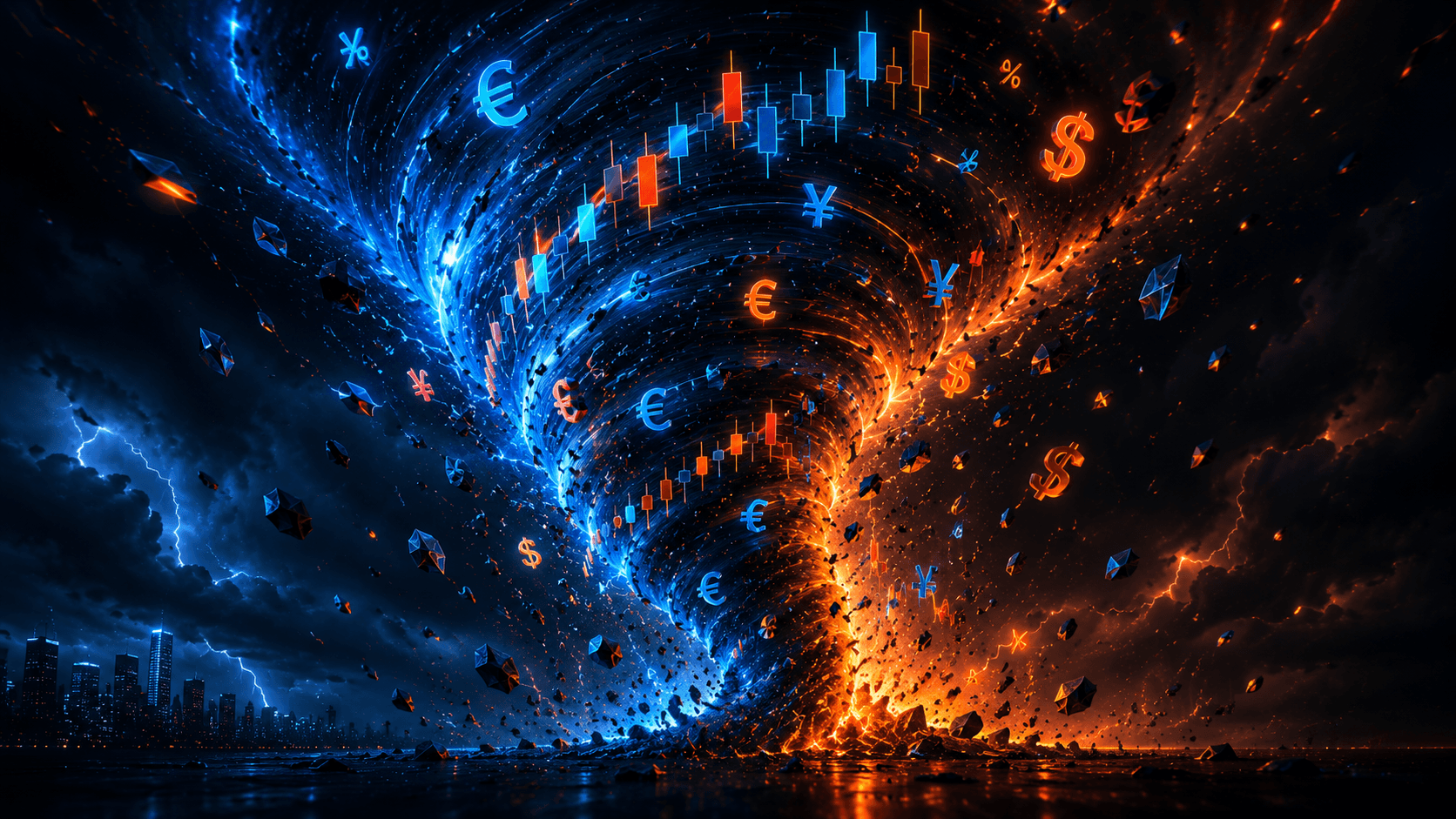
Financial markets are in constant motion, with prices rising and falling in response to countless global events. For traders, these movements represent opportunity. However, when price swings become rapid and unpredictable, it's known as market volatility. While the term can sound intimidating, understanding what drives volatility is fundamental to navigating the markets with confidence.
This guide will explain market volatility, explore the factors that cause it, and provide strategies to help you manage risk and make informed decisions. Grasping these concepts is a crucial step for any trader looking to build a resilient and effective trading strategy. Whether you are just starting or have years of experience, a clear understanding of volatility is an invaluable asset in your trading toolkit.
What is Market Volatility?
In simple terms, market volatility is a measure of how much and how quickly the price of a financial instrument, like a stock or currency pair, changes over time. It is a statistical measure of the dispersion of returns for a given asset.
-
High volatility means that an asset's price is changing dramatically over a short period. This can present significant opportunities for profit but also carries a higher level of risk.
-
Low volatility indicates that an asset's price is relatively stable, with smaller price fluctuations. This generally implies lower risk, but also potentially smaller and slower returns.
Volatility is often measured using statistical tools like standard deviation or the Volatility Index (VIX), commonly known as the "fear index." The VIX tracks the market's expectation of 30-day volatility in the S&P 500 index. A high VIX reading suggests that investors anticipate significant price swings, often signaling market uncertainty.
What Causes Market Volatility?
Volatility is not random; it is the market's reaction to new information and changing expectations. Several key factors can trigger these sharp price movements.
Economic and Political Events
-
Economic Data Releases: Reports on inflation (like the Consumer Price Index), employment figures (such as the Non-Farm Payrolls), and Gross Domestic Product (GDP) growth can have an immediate impact on markets. A surprising result can cause a sudden shift in investor sentiment and trigger volatility.
-
Central Bank Policies: Decisions made by central banks, such as the US Federal Reserve or the European Central Bank, regarding interest rates and monetary policy are major drivers. An unexpected interest rate hike or cut can send ripples across forex, stock, and bond markets.
-
Geopolitical Tensions: Political instability, trade disputes, and international conflicts create uncertainty. This uncertainty often leads investors to move their capital to "safe-haven" assets like gold or the Swiss franc, causing volatility in other markets.
Industry and Company-Specific News
-
Earnings Reports: For stocks, quarterly earnings reports are a significant source of volatility. If a company's results beat or miss analyst expectations, its stock price can move sharply.
-
Technological Breakthroughs: Innovations within an industry can disrupt the status quo, causing the stock prices of established companies to fall while new players rise.
-
Regulatory Changes: New government regulations can impact an entire sector's profitability, leading to widespread volatility. For example, stricter environmental laws could affect energy stocks, while new financial regulations might impact the banking sector.
Market Sentiment and Trader Behavior
-
Fear and Greed: These two emotions are powerful forces in the financial markets. Widespread fear can lead to panic selling, causing prices to plummet. Conversely, greed can fuel speculative bubbles where asset prices rise far beyond their intrinsic value.
-
Market Liquidity: Liquidity refers to the ease with which an asset can be bought or sold without affecting its price. In markets with low liquidity, even small trades can cause large price swings, leading to higher volatility.
Strategies for Trading in a Volatile Market
High volatility can be a double-edged sword. While it increases risk, it also creates opportunities for traders who are prepared. Here are some strategies to consider.
1. Use Stop-Loss and Take-Profit Orders
Managing risk is paramount in volatile conditions.
-
A stop-loss order is an instruction to close a trade at a specific price to limit potential losses if the market moves against you.
-
A take-profit order automatically closes a trade once it reaches a certain level of profit, ensuring you lock in gains before the market reverses.
Using these orders helps you define your risk-reward ratio before entering a trade and removes emotion from your decision-making.
2. Adjust Your Position Size
In highly volatile markets, it is prudent to reduce your position size. Smaller positions mean that each price movement (or "pip" in forex) has a smaller impact on your account balance. This allows you to stay in the market longer without risking a significant portion of your capital on a single trade.
3. Stay Informed but Avoid Knee-Jerk Reactions
Keeping up with economic news and market events is crucial. Use an economic calendar to know when important data releases are scheduled. However, it's equally important not to react impulsively to every headline. Often, the market's initial reaction can be an overreaction. A disciplined trader waits for confirmation and sticks to their trading plan.
4. Diversify Your Portfolio
Diversification is a classic risk management strategy. By spreading your investments across different asset classes (e.g., forex, indices, metals, stocks), you can mitigate the impact of a downturn in any single market. A negative event affecting one asset may not affect another, helping to stabilize your overall portfolio.
Your Next Steps in a Volatile Market
Market volatility is an inherent feature of trading, driven by the constant flow of economic, political, and social information. Instead of fearing it, successful traders learn to understand its causes and respect its power. By implementing robust risk management strategies, staying informed, and maintaining discipline, you can navigate volatile periods effectively.
At MY MAA MARKETS, we are committed to empowering you with the tools and education needed for informed decision-making. Our FSC-regulated platform provides access to over 275+ instruments, advanced trading tools on MT5, and 24/7 expert support. Whether you're ready to start trading or want to practice with a demo account, we provide a secure and efficient environment to help you achieve your financial goals.
Risk Disclosure: Investing in financial markets carries a high level of risk and may not be suitable for all investors. Before making any trading decisions, you should carefully consider your investment objectives, risk tolerance, and financial situation. Only invest money you can afford to lose.