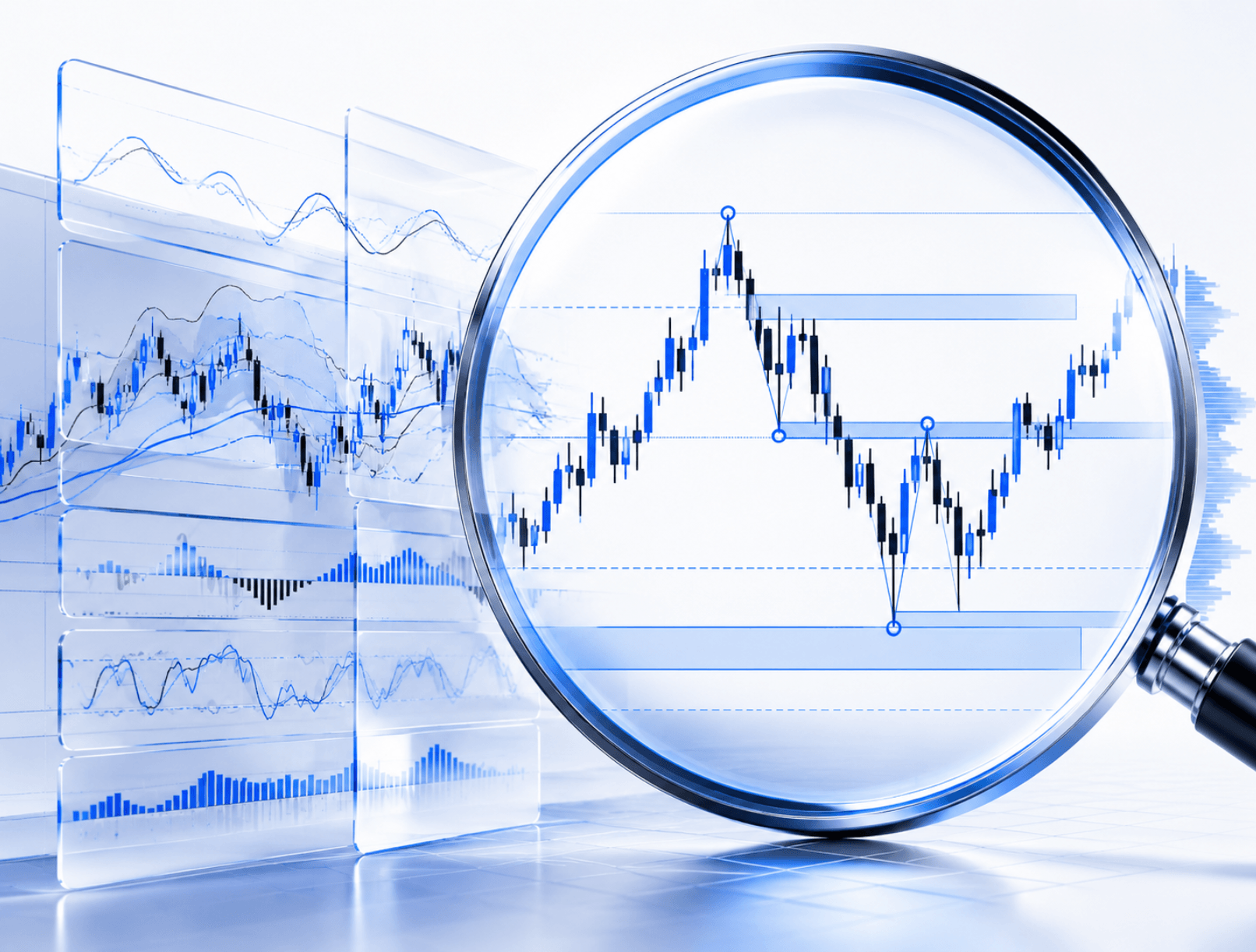



In the vast ocean of global finance, attempting to predict the movement of a single wave—an individual stock—can be a perilous endeavour. The company may have strong fundamentals, but a sudden management change or a singular bad earnings report can capsize your position. This is "unsystematic risk," and for sophisticated traders, it is a variable to be minimized.
Enter index trading: the strategy of trading the tide rather than the wave.
By trading indices like the S&P 500, the FTSE 100, or the NASDAQ 100, you are speculating on the health of entire economies or sectors. It offers instant diversification and high liquidity, but it also exposes traders to the full force of geopolitical events and macroeconomic shifts. Mastering this asset class requires more than intuition; it demands a fusion of robust strategy, risk management, and institutional-grade technology.
This guide explores the architectural pillars of successful index trading, designed to help you navigate global markets with confidence.
The Strategic Triad: Trend, Breakout, and Swing
Success in index trading is rarely accidental. It is the result of applying disciplined methodologies to market chaos. While there are countless ways to trade, three strategies remain the gold standard for navigating indices.
1. Trend Following
The market often moves in sustained directions driven by macroeconomic sentiment. Trend following involves identifying this momentum—bullish or bearish—and trading in that direction. Tools like Moving Averages are essential here. If an index like the NASDAQ is consistently trading above its 50-day moving average, the trend is up. The goal is not to buy at the bottom and sell at the top, but to capture the "meat" of the move.
2. Breakout Strategies
Indices often trade within defined ranges, bouncing between support (floor) and resistance (ceiling) levels. A breakout strategy involves waiting for the price to breach these levels, signalling a potential surge in volatility.
- Expert Insight: Patience is key. Professional traders often wait for a "retest"—where the price breaks a level, comes back to touch it, and then continues in the breakout direction—to confirm the move isn't a "fakeout."
3. Swing Trading
For traders who cannot monitor charts every minute, swing trading captures medium-term moves over days or weeks. This strategy capitalizes on the natural ebb and flow of market cycles, allowing traders to profit from the broader economic sentiment without the stress of intraday noise.
The Analyst’s Toolkit: Fundamental vs. Technical
To master indices, one must be bilingual in the languages of the market: Fundamental and Technical analysis. Fundamental Analysis answers the "Why." It involves monitoring the economic engine room. Interest rate decisions by the Federal Reserve, GDP data, and employment reports (like the US Non-Farm Payrolls) are the fuel that drives index prices. For example, higher interest rates often weigh heavily on tech-heavy indices like the NASDAQ, as borrowing costs rise for growth companies.
Technical Analysis answers the "When." Once you understand the economic backdrop, technical tools help you time your entry. Chart patterns, support/resistance levels, and indicators like the Relative Strength Index (RSI) provide the roadmap for executing your trade.
At My Maa Markets, we believe the most successful traders synthesize these two schools of thought. They use fundamentals to determine the direction of the trade and technicals to determine the entry point.
The Double-Edged Sword: Leverage and Spreads
In the world of index trading, efficiency is mathematically defined by two concepts: Leverage and Spreads.
Understanding Leverage
Leverage allows you to control a large position with a relatively small amount of capital. For instance, with 1:500 leverage, a small deposit can control a significantly larger value in the market. While this can amplify profits, it is vital to remember that it amplifies losses just as effectively. Leverage is a tool, not a strategy, and it requires a deep understanding of its implications to be used safely.
The Impact of Tight Spreads
The "spread" is the cost of doing business—the difference between the buy and sell price. For active traders, spreads are the silent killer of profitability.
Consider a high-frequency trader executing 10 trades a day. A wide spread eats into profit on every single transaction. This is why My Maa Markets offers spreads starting from 0.0 pips. By minimizing transaction costs, you retain more of your hard-earned profit, which is essential for the long-term viability of any trading strategy.
The Shield: Risk Management and Psychology
The most dangerous adversary in trading is not the market; it is human emotion. Fear of missing out (FOMO) leads to buying at the top, while panic leads to selling at the bottom. To combat this, you need strict risk management protocols.
-
The Stop-Loss Order: This is your emergency brake. It automatically closes your trade if the market moves against you by a predetermined amount. Trading without a stop-loss is not trading; it is gambling.
-
Position Sizing: Never risk more than 1-2% of your total account capital on a single trade. This mathematical discipline ensures that a string of losses—which happens to even the best traders—does not wipe out your account.
-
The Trading Journal: Record the logic behind every trade. This helps identify behavioral patterns, such as overtrading or ignoring correlations between markets (e.g., buying the S&P 500 and the NASDAQ simultaneously effectively doubles your risk exposure).
The Infrastructure of Success
Even the most sophisticated strategy will fail if executed on poor infrastructure. In fast-moving global markets, latency (delay) translates directly to financial loss.
You need a platform that offers stability, advanced charting tools, and institutional-grade execution speeds. MetaTrader 5 (MT5), the industry standard offered by My Maa Markets, provides the technical environment necessary for professional analysis and algorithmic trading.
Furthermore, the safety of your funds is paramount. Trading with a regulated broker provides the necessary oversight to ensure a secure environment. My Maa Markets is regulated by the FSC (Financial Services Commission - Mauritius), ensuring that we adhere to strict standards of financial compliance and client fund protection.
Conclusion: Your Journey to Market Mastery
Mastering index trading is not a destination; it is a continuous journey of education, discipline, and adaptation. By understanding the economic drivers, employing robust risk management, and utilizing professional tools, you position yourself to capitalize on global trends rather than being swept away by them.
Whether you are looking to diversify your portfolio or actively trade market volatility, the right partner makes all the difference.
Ready to apply these strategies?
At My Maa Markets, we provide the toolkit you need for success:
✅ FSC Regulated Environment for peace of mind. ✅ Spreads from 0.0 pips to maximize your profitability. ✅ Advanced MT5 Platform for precise execution. ✅ 24/7 Expert Support to guide you at every step.
Start Trading with My Maa Markets Today
Disclaimer: Trading involves significant risk and may not be suitable for all investors. You should carefully consider your investment objectives, experience level, and risk appetite. Only invest money you can afford to lose.