

Imagine flipping a coin three times. If it lands on heads all three times, would you bet your life savings that it will land on heads the fourth time?
Of course not. You intuitively know that three flips isn't enough data to predict the future. Yet, in the world of trading, countless beginners make this exact mistake every day. They see a strategy work twice in a row, assume they’ve cracked the code, and increase their position size—only to face a sudden drawdown.
At My Maa Markets, we believe that long-term profitability isn't about luck; it's about statistical probability. And you can’t understand probability without understanding sample size.
Here is why judging a trading method on a handful of trades is a dangerous game, and how you can use data to trade with true confidence.
The Illusion of the "Perfect" Strategy
When you are backtesting a new method on MetaTrader 5 (MT5), it is easy to get excited by a streak of green. You might see five winning trades in a week and think, "This is it."
But in statistics, this is called the Law of Small Numbers. Small datasets are prone to extreme results that don't reflect reality. A strategy with a 40% win rate can easily win 5 times in a row simply by chance. Conversely, a profitable strategy with a 60% win rate can lose 5 times in a row.
If you judge your method based on 10 or 20 trades, you aren't trading—you're gambling on a coin toss.
The Magic Number: Why You Need More Data
To truly know if your edge is real, you need a statistically significant sample size.
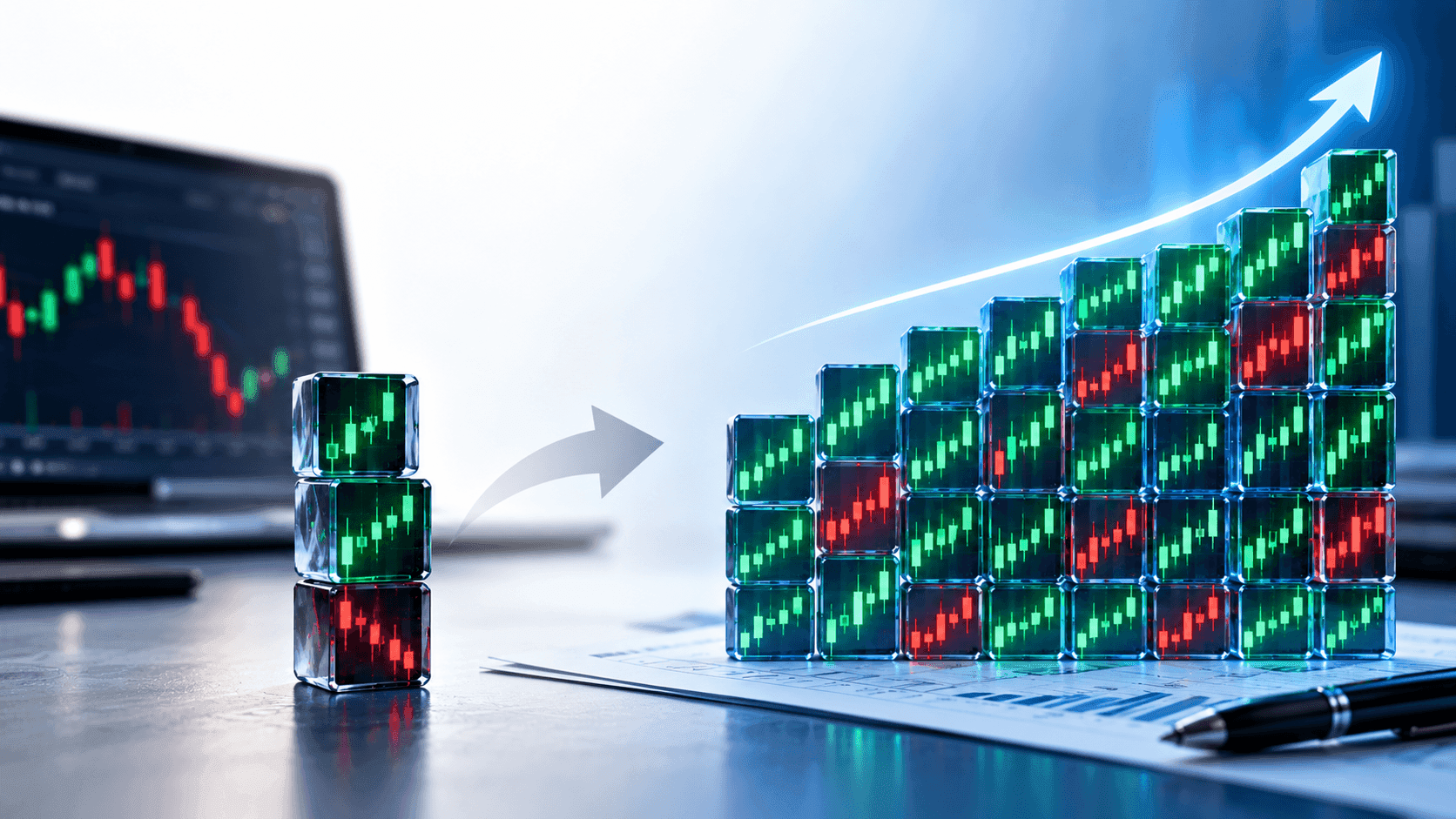
For most retail traders, a sample size of 100 trades is often cited as a solid baseline. Over 100 trades, the element of luck begins to fade, and the true expectancy of your system reveals itself.
With a proper sample size, you can accurately measure:
-
Win Rate: The actual percentage of winning trades.
-
Risk-to-Reward Ratio: Does your average win cover your average loss?
-
Maximum Drawdown: The largest drop in capital you should expect during a losing streak.
Without this data, you are flying blind. You might abandon a winning strategy just because it hit a statistical rough patch, or worse, pour money into a losing strategy that was just "lucky" for a week.
How to Build Your Sample Size Safely
We understand that risking real capital to test 100 trades feels daunting. That is why risk management and the right environment are crucial.
- Utilize Demo Accounts
Before you risk a single dollar, use a Demo Account. It allows you to execute trades in real-time market conditions without financial risk. It is the perfect sandbox to build your initial sample size of 100 trades.
- Backtest with Precision
Use the advanced strategy tester tools on MT5 to run your method through historical data. While past performance doesn't guarantee future results, it helps you gather data on hundreds of potential trade setups in minutes, not months.
- Start Small (Micro-Lots)
When you are ready to go live, size down. At My Maa Markets, we allow you to trade with flexible lot sizes. By trading small, you can gather live market data and test your psychology without exposing your account to ruin during the "testing phase."
The Professional Mindset
Institutional traders don't look at the result of the last trade; they look at the result of the next 1,000 trades. They trust the math, not the emotion of the moment.
To transition from a hobbyist to a professional, you must detach yourself from the outcome of individual trades. If your sample size proves your strategy works over the long haul, a single loss is just a business expense.
Ready to Test Your Edge?
The market rewards those who do their homework. Don't rely on luck—rely on data.
Whether you need a risk-free environment to practice or the lowest spreads to maximize your edge, we are here to support your journey. Start building your sample size today.
👉 Open a Demo Account with My Maa Markets
Disclaimer: Trading involves significant risk and may not be suitable for all investors. You should carefully consider your investment objectives, experience level, and risk appetite. Only invest money you can afford to lose.