


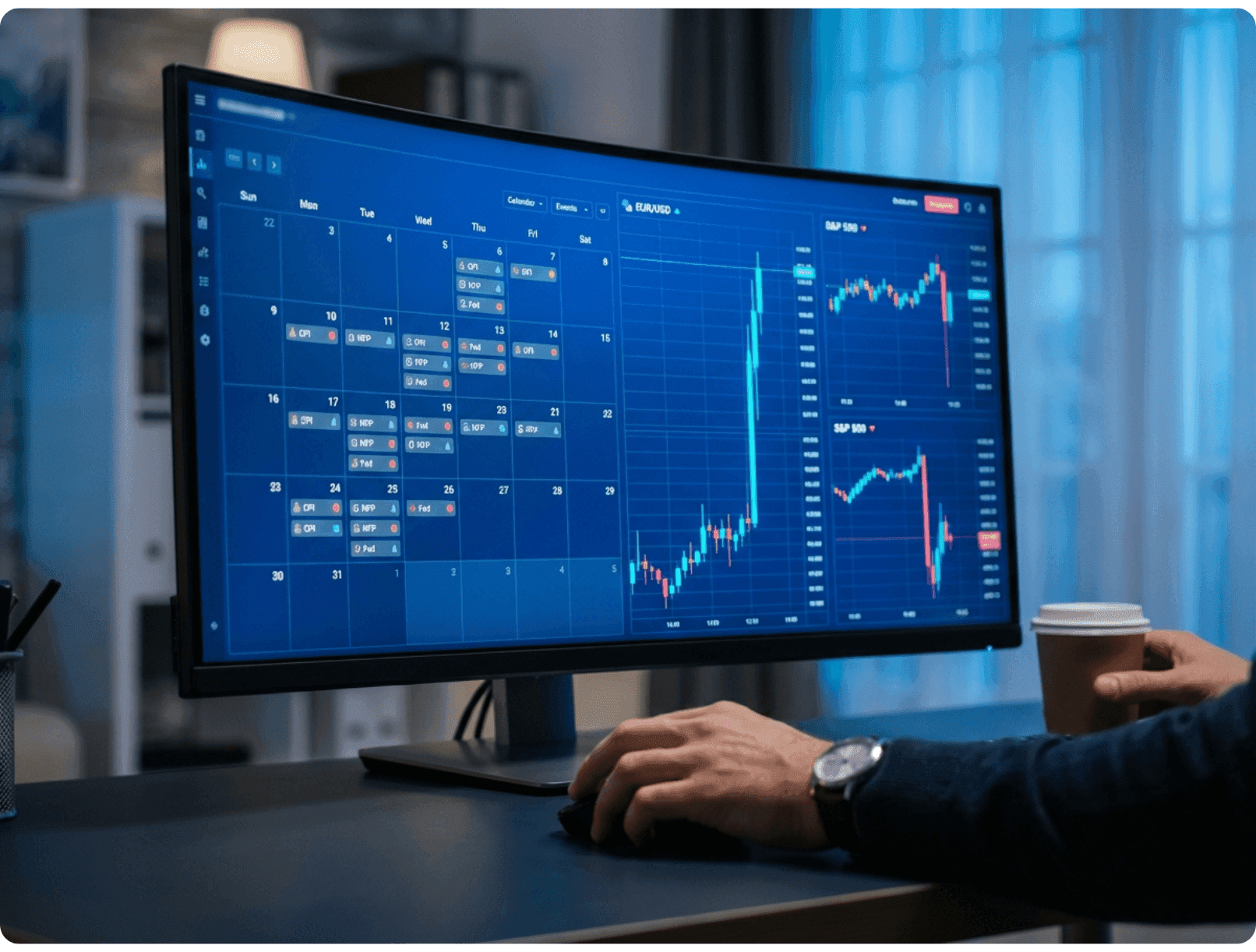
For any trader, understanding the forces that drive market movements is fundamental. While technical analysis provides a roadmap of price action, it’s the economic calendar that often lights the fuse for major shifts. These scheduled data releases and announcements act as the pulse of the global economy, offering critical insights into a country's financial health. For traders, ignoring these events is like sailing without a compass.
This guide breaks down the ten most influential events on the economic calendar. Mastering these will not only help you anticipate potential volatility but also empower you to make more informed and strategic trading decisions.
1. Interest Rate Decisions
Central banks, such as the U.S. Federal Reserve (Fed), the European Central Bank (ECB), and the Bank of England (BoE), set their nation's benchmark interest rates. These decisions are arguably the most powerful market-moving events. Higher rates typically attract foreign investment, strengthening the currency, while lower rates can have the opposite effect. Traders watch these announcements meticulously, as even a quarter-point change—or the hint of a future change—can trigger significant price swings across forex, stocks, and indices.
2. Gross Domestic Product (GDP) Releases
GDP is the broadest measure of a country's economic activity, representing the total value of all goods and services produced over a specific period. A strong GDP growth rate signals economic expansion, which often leads to a stronger currency and a bullish stock market. Conversely, a weak or negative GDP figure can indicate an economic slowdown or recession, causing investors to sell off assets. Preliminary or "advance" GDP releases are particularly impactful as they provide the first look at a country's recent economic performance.
3. Inflation Reports (CPI & PPI)
Inflation measures the rate at which the general level of prices for goods and services is rising, and subsequently, purchasing power is falling. The Consumer Price Index (CPI) tracks the cost of a basket of consumer goods and services, while the Producer Price Index (PPI) measures inflation at the wholesale level. High inflation erodes purchasing power but often forces central banks to raise interest rates to cool the economy, which can strengthen a currency. These reports are scrutinised for clues on future monetary policy.
4. Employment Data
Key employment figures, such as the Unemployment Rate and the U.S. Non-Farm Payrolls (NFP) report, are vital indicators of economic health. The NFP, released on the first Friday of each month, measures the number of new jobs created in the U.S. outside the agricultural sector. A strong NFP number suggests a growing economy, which can boost the U.S. dollar and stock markets. High unemployment, on the other hand, signals economic weakness and can lead to market downturns.
5. Retail Sales Figures
Retail sales data tracks consumer spending, which is a major driver of most developed economies. A strong retail sales report indicates that consumers are confident and spending money, which fuels economic growth. This often translates to a stronger currency and positive sentiment in the stock market. For instance, an unexpected surge in U.S. retail sales can signal robust consumer demand, giving the Federal Reserve more room to consider tighter monetary policy.
6. Manufacturing & Services Indices (PMI & ISM)
Purchasing Managers' Indexes (PMI) are leading indicators of economic health for both the manufacturing and services sectors. Surveying purchasing managers at businesses, these indices provide a snapshot of industry conditions. A reading above 50 indicates expansion, while a reading below 50 signals contraction. The ISM Manufacturing Index in the U.S. is one of the most closely watched reports, as the manufacturing sector's health often precedes the broader economy's direction.
7. Consumer Confidence Surveys
Consumer confidence surveys, such as the Conference Board (CB) Consumer Confidence and the University of Michigan Consumer Sentiment Index, measure how optimistic consumers are about their financial situation and the broader economy. Confident consumers are more likely to spend, which drives economic growth. A drop in confidence can be an early warning sign of an economic slowdown, as it suggests consumers may pull back on spending.
8. Trade Balance Data
The trade balance measures the difference between a country's exports and imports. A trade surplus (exports exceed imports) is generally seen as positive for a country's economy and currency, as it indicates that foreign nations are buying more of its goods and services. A trade deficit (imports exceed exports) can be a sign of economic weakness, though this is not always the case, particularly for consumption-driven economies like the U.S.
9. Housing Market Data
Housing market data, including new home sales, building permits, and existing home sales, serves as a key barometer of economic strength. A robust housing market stimulates economic activity through construction, consumption of durable goods, and job creation. Weak housing data, conversely, can signal a broader economic slowdown, as it often reflects declining consumer confidence and tighter lending conditions.
10. Central Bank Meetings & Speeches
Beyond official interest rate decisions, the minutes from central bank meetings and speeches by their governors or chairs are incredibly significant. These communications provide crucial forward guidance on future monetary policy. Traders dissect every word for hints about future rate hikes, cuts, or quantitative easing measures. A "hawkish" tone suggests a readiness to raise rates, while a "dovish" tone implies a preference for lower rates or accommodative policy.
Mastering the Economic Calendar for Trading Success
Integrating the economic calendar into your trading routine is not just an option—it's a necessity for effective risk management and strategy. By understanding when these key events occur and their potential impact, you can better position yourself to navigate volatility and identify opportunities. Remember that the market's reaction is often based on how the actual data compares to the consensus forecast. At My Maa Markets, we provide the tools and resources to help you stay ahead. Our platform includes a real-time economic calendar and expert analysis to ensure you are always prepared for what's next. Start your trading journey with a partner committed to your success.
Ready to trade with an edge? Open an account with MyMaa Markets today.