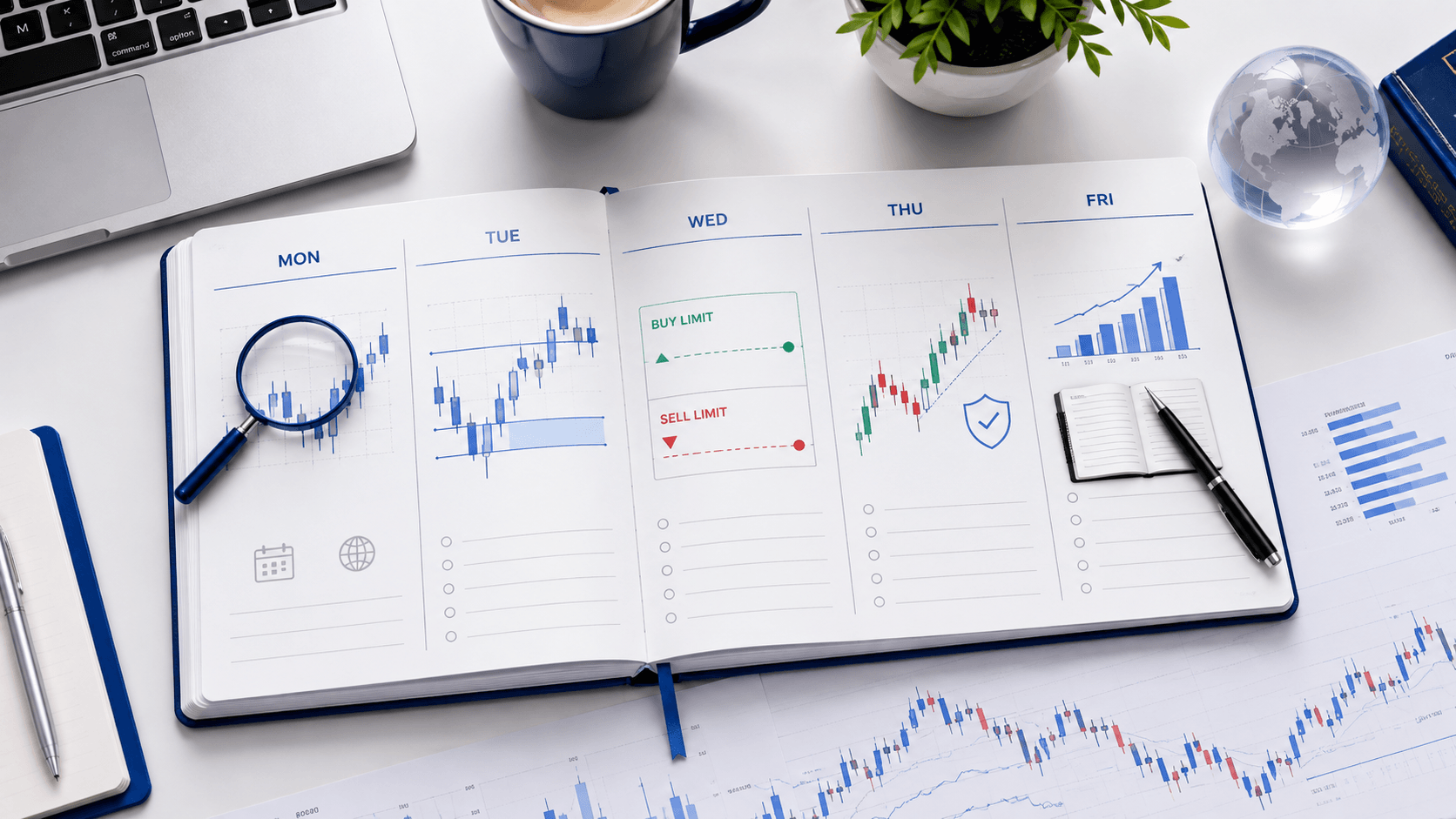


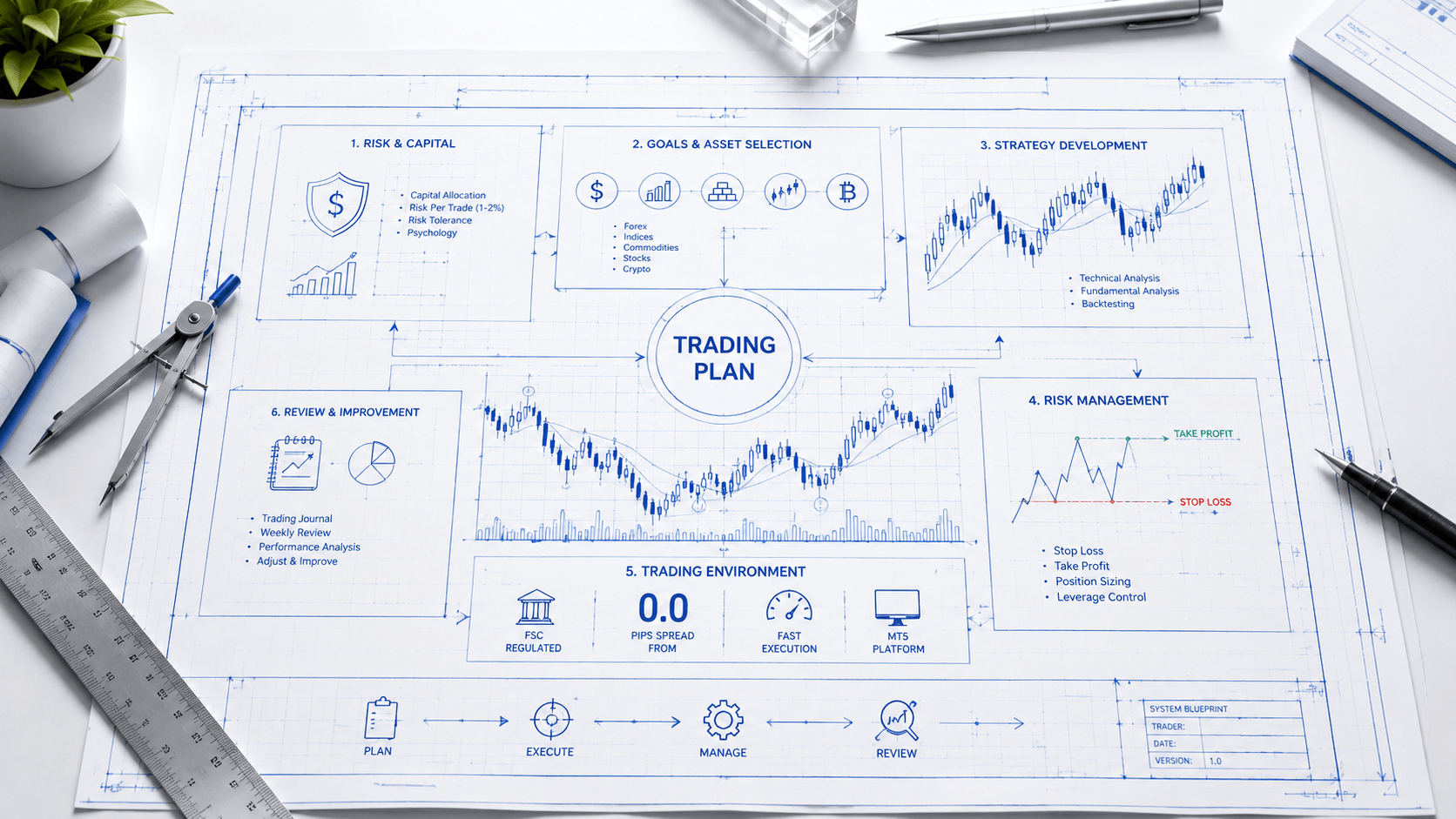
Success in the financial markets rarely happens by accident. While the excitement of market volatility can be alluring, sustainable trading requires structure, discipline, and a clear roadmap. This roadmap is known as a trading plan. A trading plan is a comprehensive set of rules that defines your trading activity. It acts as your personal rulebook, removing emotion from decision-making and ensuring consistency. Without one, you are essentially gambling; with one, you are operating a business.
Whether you are a beginner exploring the markets or an experienced trader looking to refine your approach, following these six steps will help you build a robust trading plan from the ground up.
1. Define Your Risk Tolerance and Capital
Before analyzing charts, you must understand your financial boundaries. Trading involves significant risk, and it is crucial to determine how much capital you are willing to allocate.
-
Assess your capital: Only trade with money you can afford to lose. This ensures that market fluctuations do not impact your daily standard of living.
-
Determine risk per trade: A common rule among professional traders is to risk no more than 1-2% of your total account balance on a single trade.
-
Understand your psychology: Are you comfortable with high volatility, or do you prefer steady, slower movements? Your personality should dictate your trading style.
2. Set Financial Goals and Choose Asset Classes
What are you trying to achieve? Setting clear, realistic goals helps you stay focused. Are you looking for supplemental income, or are you aiming to grow capital over the long term?
Once your goals are set, select the asset classes that align with them. At My Maa Markets, you have access to over 275 instruments across five asset classes:
-
Forex: Ideal for those who prefer high liquidity and 24/5 trading.
-
Indices: Great for tracking the performance of entire economies (e.g., US500, UK100).
-
Commodities: Assets like Gold (XAUUSD) or Oil often serve as hedges against inflation.
-
Stocks & Crypto: For those interested in specific company performance or digital assets.
3. Develop a Strategy with Market Analytics
Your strategy is the "how" of your trading plan. It defines exactly when you will enter and exit the market.
- Technical Analysis: Use technical indicators (like Moving Averages or RSI) on the MetaTrader 5 (MT5) platform to identify trends and price patterns.
- Fundamental Analysis: Keep an eye on economic news and reports that drive market volatility.
- Backtesting: Before going live, test your strategy using historical data to see how it would have performed in the past.
4. Incorporate Risk Management Rules
A good strategy can still fail without proper risk management. This section of your plan is non-negotiable.
-
Stop Loss & Take Profit: Always define your exit points before opening a trade. A Stop Loss protects your capital if the market moves against you.
-
Leverage Wisely: Leverage can amplify gains, but it also magnifies losses. While My Maa Markets offers leverage options, it is vital to use it responsibly. For beginners, lower leverage is often safer until you gain experience.
5. Choose a Cost-Effective, Regulated Platform
Your trading environment plays a massive role in your profitability. High transaction costs can eat into your margins, and unregulated brokers pose a security risk.
Ensure your broker offers:
-
Regulation: My Maa Markets is fully regulated by the FSC (Mauritius), ensuring strict adherence to financial standards.
-
Low Costs: Look for spreads starting from 0.0 pips and zero commissions to keep your overheads low.
-
Reliability: Fast execution speeds ensuring you get the price you see.
6. Establish a Routine for Review
The market changes, and so should you. A trading plan is a living document that requires regular review.
-
Keep a Trading Journal: Record every trade, including your entry/exit price, the reason for the trade, and the emotional state you were in.
-
Weekly Review: At the end of every week, analyze your winning and losing trades. Did you follow your plan?
-
Adjust Accordingly: If a strategy isn't working over a significant sample size, tweak your parameters.
Summary
Building a trading plan is the first step toward becoming a disciplined trader. By understanding your risk, selecting the right assets, and using a regulated platform like My Maa Markets, you position yourself for a more structured trading journey.
Ready to put your plan into action? Open a demo account today to practice risk-free, or sign up for a live account to access global markets with competitive conditions.