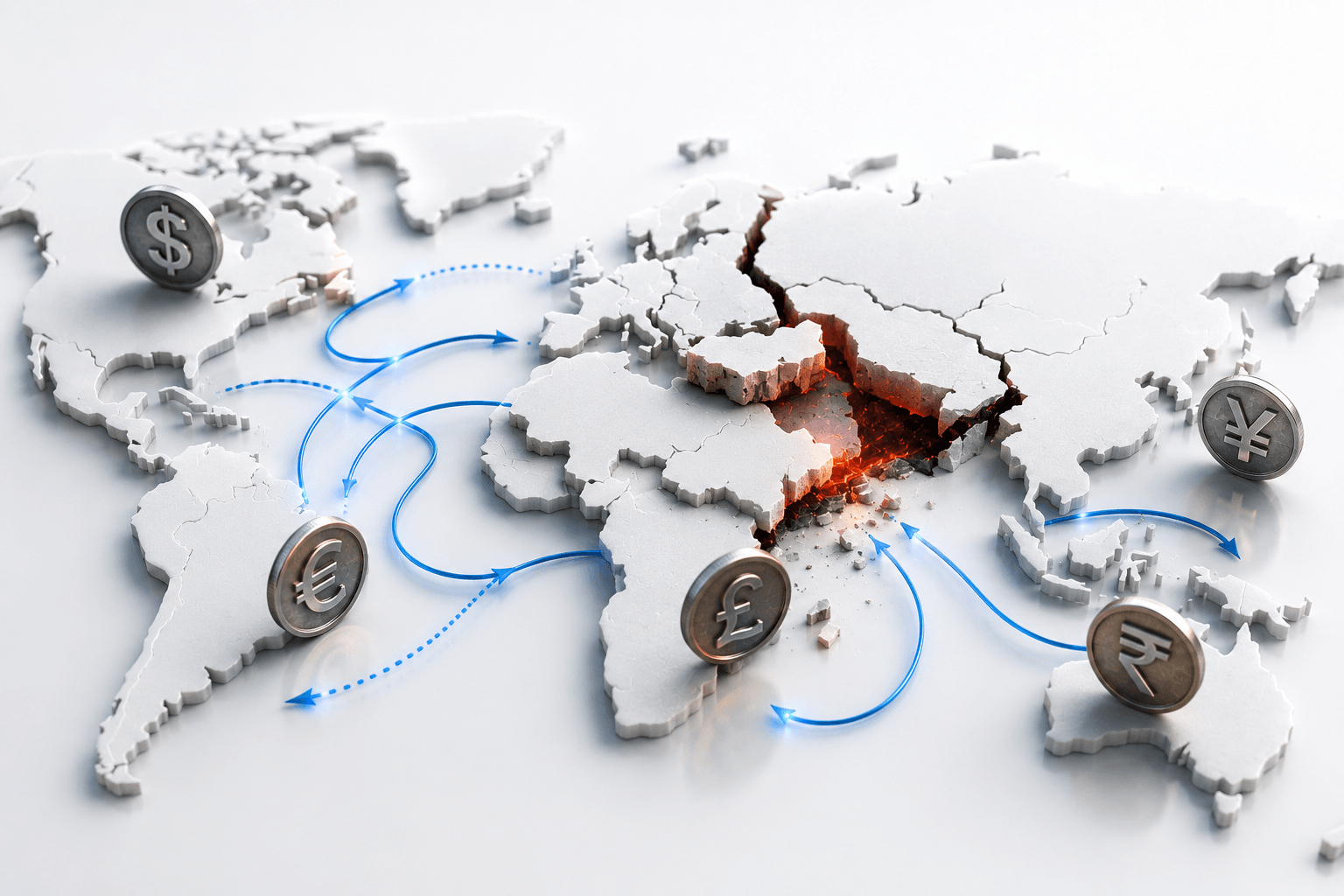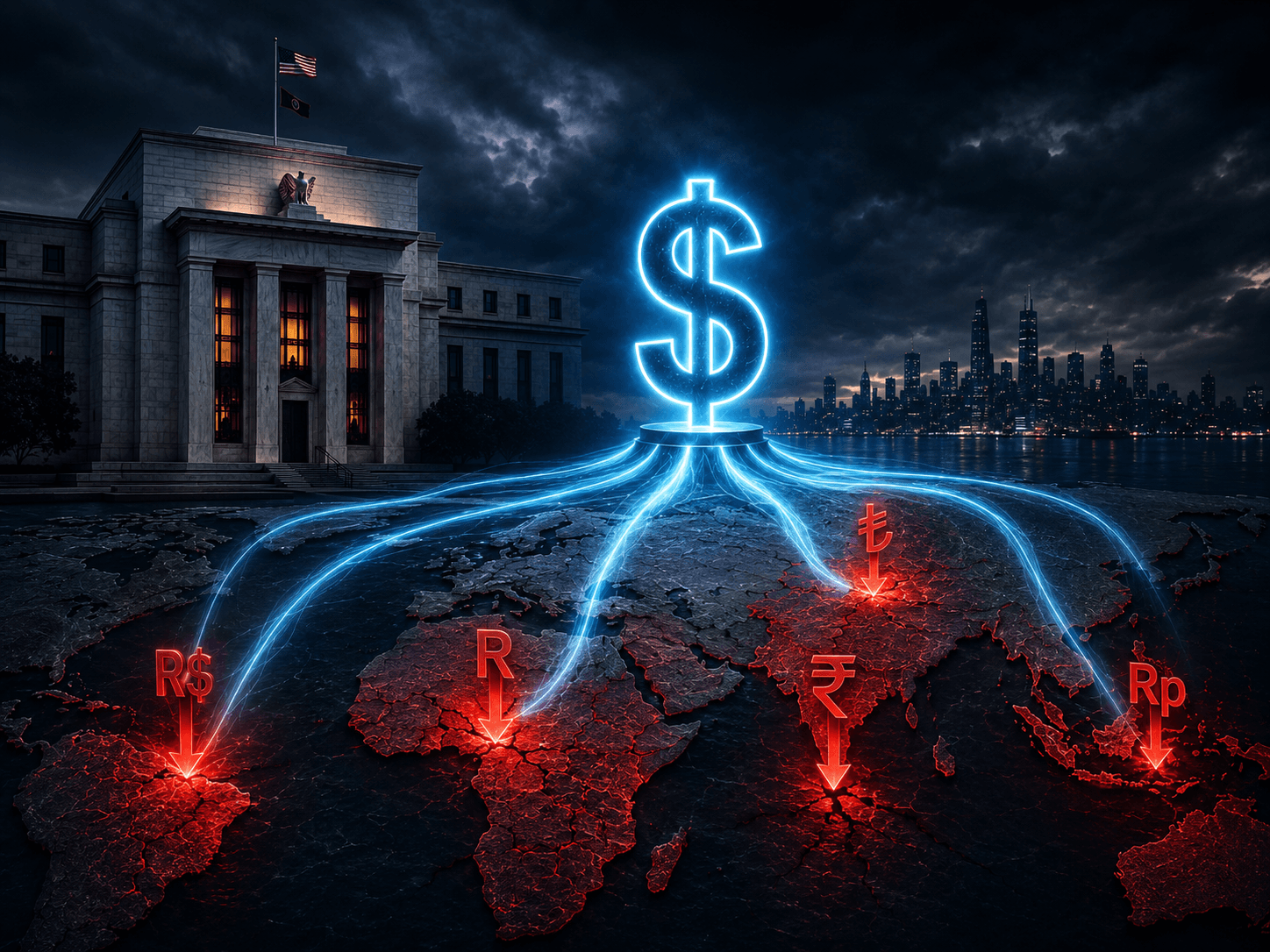



Nobody sits down and decides to blow up a currency. Capital flight does not begin with a single dramatic event. It begins with thousands of individual decisions, each one rational on its own, all pointing in the same direction at the same time. When enough people make the same decision simultaneously, the currency they are all selling cannot hold its ground regardless of what the central bank does next.
What capital flight actually is
Capital flight is the large-scale movement of money out of a country driven not by investment logic but by fear. Fear of currency depreciation, political instability, banking system collapse, or property expropriation. It differs from normal capital outflows, which are orderly and driven by return-seeking, because it is driven by loss-avoidance. The people moving money are not looking for a better return somewhere else. They are trying to protect what they already have from a risk they believe is coming.
The scale can become extraordinary quickly. In the weeks after Argentina's convertibility crisis broke in December 2001, Argentines withdrew several billion dollars from the banking system in a matter of days before the government froze deposits entirely. In Russia, in the weeks following the February 2022 invasion of Ukraine, capital outflows reached levels that the central bank later described as unprecedented in the country's post-Soviet history. In Lebanon between 2019 and 2021, an estimated seventy to eighty billion dollars of deposits effectively became inaccessible as the banking system collapsed under the weight of a government that had borrowed from those same banks to fund years of fiscal deficits.
In each case, the people who moved their money earliest lost the least. The people who waited, either out of loyalty, optimism, or lack of access to foreign accounts, absorbed the full cost of the collapse.
What triggers it
Capital flight rarely begins with a single event. It builds through a sequence where each development makes the next one more likely.
The first sign is usually a widening gap between the official exchange rate and the black market rate. When residents cannot access dollars at the official rate and must pay a significant premium on the parallel market, they are signalling their view that the official rate is unsustainable. That premium is the market's probability estimate of an eventual devaluation, expressed through the only channel available to people who cannot trade the currency formally.
Political instability accelerates the process. When a government that has maintained fiscal discipline is replaced by one that signals it will spend beyond its means, or when an election produces an uncertain outcome that threatens property rights or the legal framework protecting private assets, the people with the most mobile capital begin moving it. They do not wait for confirmation. Confirmation arrives too late to be useful.
Banking system stress is the final accelerant. When depositors begin to believe that the banks holding their savings may not be able to return them, the rational response is withdrawal. The problem is that bank runs are self-fulfilling. A bank that is perfectly solvent can be made insolvent by a sufficient withdrawal of deposits, because banks do not hold all their deposits in liquid form. When enough people withdraw simultaneously, the bank fails regardless of whether it would have failed under normal conditions.
What does it do to the currency?
The currency impact of capital flight is direct and severe. Residents selling local currency to buy dollars or other hard currencies create selling pressure that the central bank must either accommodate or resist. Most central banks initially resist, using foreign exchange reserves to buy local currency and defend the exchange rate.
This defence can last for months if reserves are substantial. But defending a currency with reserves is an asymmetric battle. The central bank is finite. The fear driving capital outflow is not. Every day the defence continues, reserves shrink. When the market calculates that remaining reserves are insufficient to sustain the defence, the outflow accelerates because everyone knows the devaluation is now closer. The defence that was supposed to prevent panic instead concentrates it into a shorter and more violent period.
The currency that emerges from a capital flight episode is rarely the same instrument that entered it. Its reserve levels are depleted. Its credibility is damaged. The foreign investors who exited during the crisis do not return immediately when stability is restored. They wait for evidence of genuine institutional repair, which takes years to accumulate.
Three episodes that show the full pattern
Argentina 2001 is the textbook case. Years of fiscal deficits, a dollar peg that had become unsustainable, an IMF bailout that required austerity measures that deepened recession, and a government that successively ran through finance ministers until credibility was exhausted entirely. The peso devalued by seventy percent in the immediate aftermath of the peg's collapse. A decade of economic instability followed.
Russia 2022 shows how sanctions and capital flight interact. The combination of asset freezes, SWIFT disconnection, and the sudden re-evaluation of political risk by foreign investors produced the fastest capital outflow in Russia's modern history. The central bank's response, a twenty percent interest rate and mandatory export revenue conversion, slowed the outflow but could not restore the pre-invasion currency structure. The ruble that emerged from those weeks was a managed domestic currency, not the freely traded instrument it had been.
Lebanon 2019 to 2021 shows what happens when capital flight intersects with a banking system that has already been hollowed out. The Lebanese pound lost more than ninety percent of its value against the dollar as the banking system effectively collapsed and the government proved unable to implement the reforms required to restore confidence. As of writing, Lebanon has not completed the IMF programme required to stabilise its financial system.
What traders can learn from capital flight episodes
The practical application for traders is about recognising the pattern early rather than reacting to it late.
The early warning signs are visible before the acute phase begins. A widening parallel market premium on the exchange rate. Accelerating foreign exchange reserve depletion disclosed in central bank monthly data. A sovereign credit rating downgrade or a widening in credit default swap spreads. Political events that threaten the institutional framework investors rely on.
None of these signals requires access to insider information. They are in the public domain. Traders who check central bank reserve data, monitor sovereign credit spreads, and use the economic calendar to track scheduled IMF review meetings and government bond auctions have access to the same early warning information that institutional managers use to position ahead of currency crises.
A real-time economic calendar not only includes routine economic releases but also central bank meetings, IMF programme review dates, and sovereign bond auction schedules for major emerging market economies. Building the habit of tracking these scheduled events around any emerging market currency you trade gives you a structural advantage over traders who react only to price.
The Gulf perspective
Capital flight is not a risk the Gulf economies face in the same form as more vulnerable emerging markets. The dollar pegs, the sovereign wealth fund reserves, and the oil revenue base provide layers of protection that most developing economies do not have.
But Gulf investors and businesses are participants in the global capital flows that capital flight episodes create. When money leaves Turkey, Lebanon, Pakistan, or Egypt, some of it flows into the Gulf. Dubai, in particular, has received significant inflows of capital seeking stability during periods of regional stress. Understanding why capital flight happens and where the money goes provides useful context for anyone operating in a financial centre that regularly receives the proceeds.
Practice monitoring the leading indicators of currency stress alongside the price action of emerging market pairs. The connection between reserve depletion, parallel market premiums, and eventual currency breaks is one of the most consistently observable patterns in global forex markets, and building the habit of reading it before it becomes obvious in the price is one of the more durable edges available to retail traders.