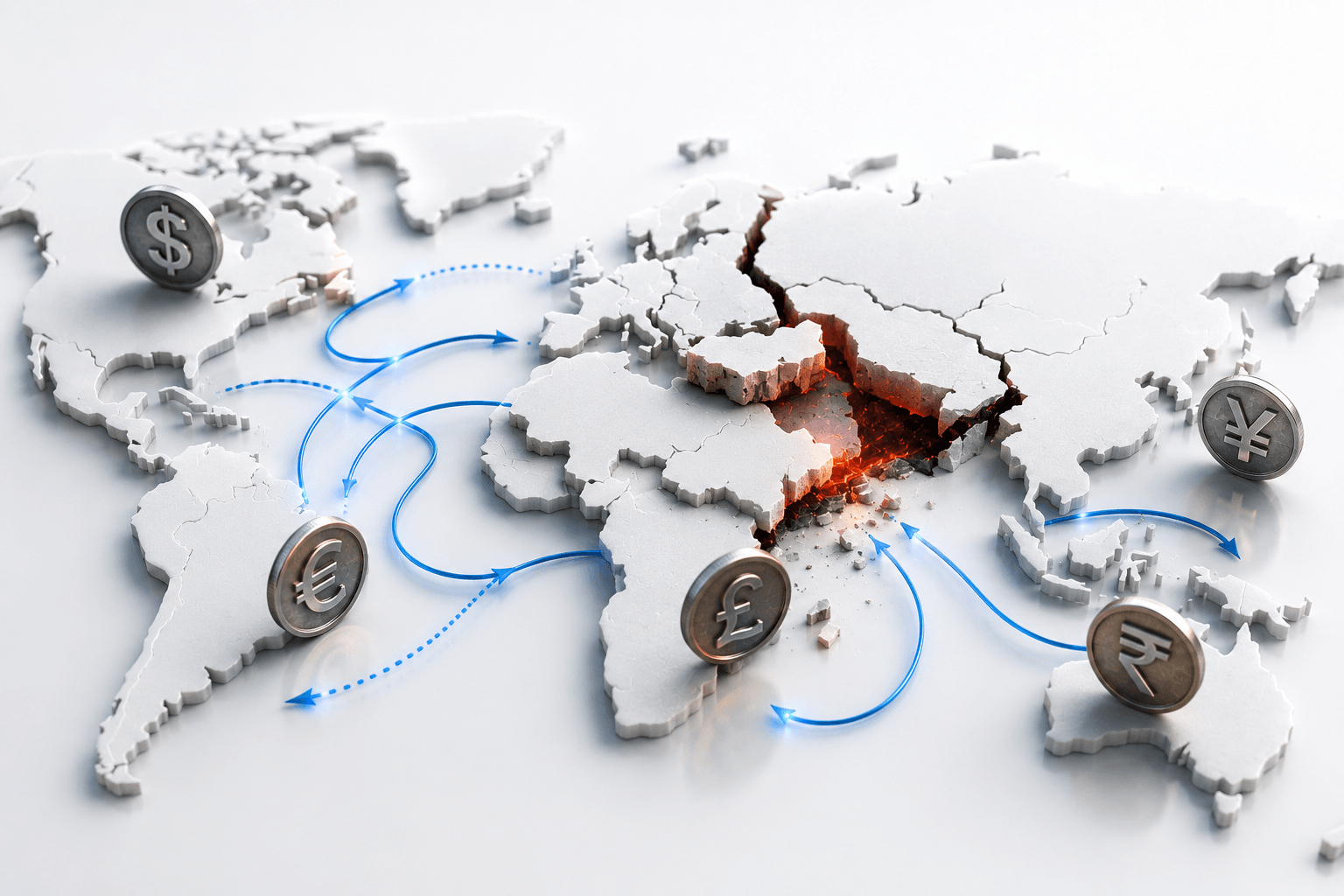


You open a position on EUR/AUD. No dollars in sight. You are trading the euro against the Australian dollar, and the US dollar does not appear anywhere in the pair. Yet the dollar is still shaping that trade. It influenced the price before you clicked buy, it will influence how the position moves while it is open, and it will be part of the conversion calculation when you close it. The dollar is the silent participant in almost every forex transaction on earth, and understanding why changes how you read the market entirely.
How the dollar became the world's pricing currency
After the Second World War, most of the world's economies were rebuilding from damage and instability. The United States emerged with its industry intact, its gold reserves substantial, and its economic output dominant. In 1944, representatives from forty-four nations met in Bretton Woods, New Hampshire, and agreed on a new global monetary system. Every major currency would be pegged to the US dollar. The dollar itself would be backed by gold at a fixed rate of thirty-five dollars per ounce.
The system broke down in 1971 when the US ended the gold convertibility, but the dollar's central role did not break down with it. By then, global trade was denominated in dollars. Oil was priced in dollars. International debt was issued in dollars. Global reserves were held in dollars. The infrastructure of the dollar-centric world had become so embedded that dismantling it would have required rebuilding the entire architecture of global commerce from scratch. Nobody did that. The dollar stayed central.
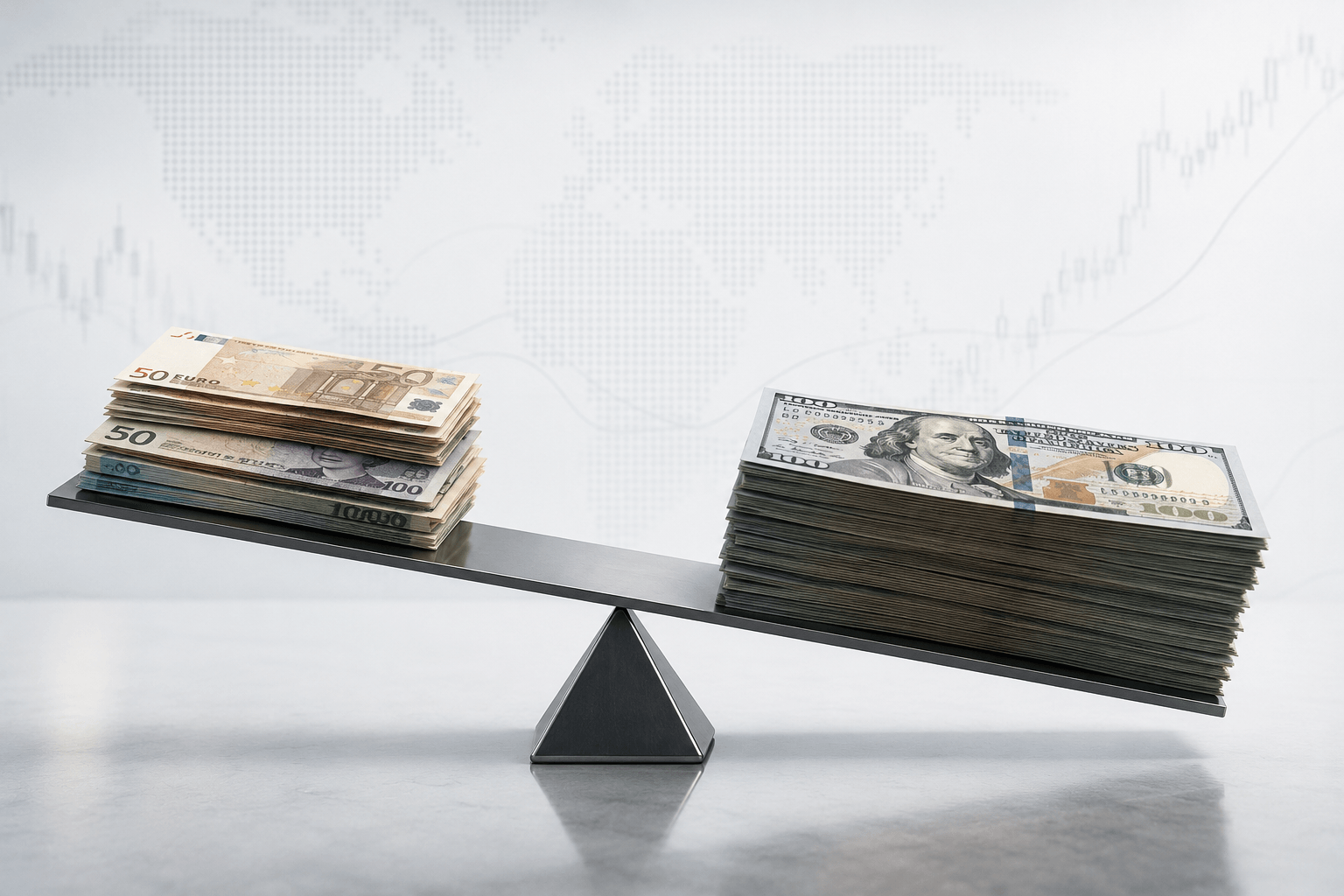
Today, roughly eighty-eight percent of all forex transactions involve the US dollar on at least one side. The next most traded currency, the euro, appears in around thirty-one percent of transactions. The dollar is not just commonly traded. It is structurally embedded in how currencies are priced against each other.
What a reserve currency actually means in practice
When people say the dollar is the world's reserve currency, they are describing something specific. Central banks around the world hold the dollar as their primary store of foreign exchange reserves. When countries need to pay international debts, settle trade invoices, or defend their own currencies during a crisis, they do it in dollars. This creates a permanent structural demand for the dollar that exists entirely independently of what the US economy is doing at any given moment.
The Gulf is one of the clearest examples of this in practice. Oil revenues across the GCC flow in dollars. The UAE dirham is pegged to the dollar at a fixed rate. Saudi Arabia has maintained its dollar peg since 1986. Every barrel of crude sold anywhere in the world is invoiced in dollars, which means every oil-importing nation on earth must acquire dollars before it can acquire energy. That daily demand across every import-dependent economy is a structural bid for the dollar that never stops.
This is why traders based in Dubai are operating inside the dollar system more directly than traders almost anywhere else. The currency in your account, the dirham, is effectively a dollar by another name. Understanding dollar dynamics is not an optional context for Gulf-based traders. It is the foundation that everything else sits on.
Why do crosses still move with the dollar
A cross pair is any pair that does not include the US dollar directly. EUR/GBP, AUD/JPY, GBP/CHF. No dollar in the pair name. But the dollar still shapes how these pairs move.
This happens because both currencies in a cross pair have their own relationship with the dollar. EUR/AUD is driven partly by what the euro is doing against the dollar and partly by what the Australian dollar is doing against the dollar. When the dollar strengthens broadly, it affects both the euro and the Australian dollar simultaneously, and the cross pair moves based on which currency the dollar hits harder. A trader who ignores dollar dynamics when trading crosses is ignoring the force that is often driving both legs of the pair in the background.
The practical way to check this before entering any cross-pair trade is to look at the dollar index, which measures the dollar against a basket of six major currencies. If the dollar index is in a strong uptrend, that broad dollar strength will be working against any position that effectively bets on dollar weakness, even if the word dollar does not appear in the pair name.
How dollar strength and weakness ripple through the market
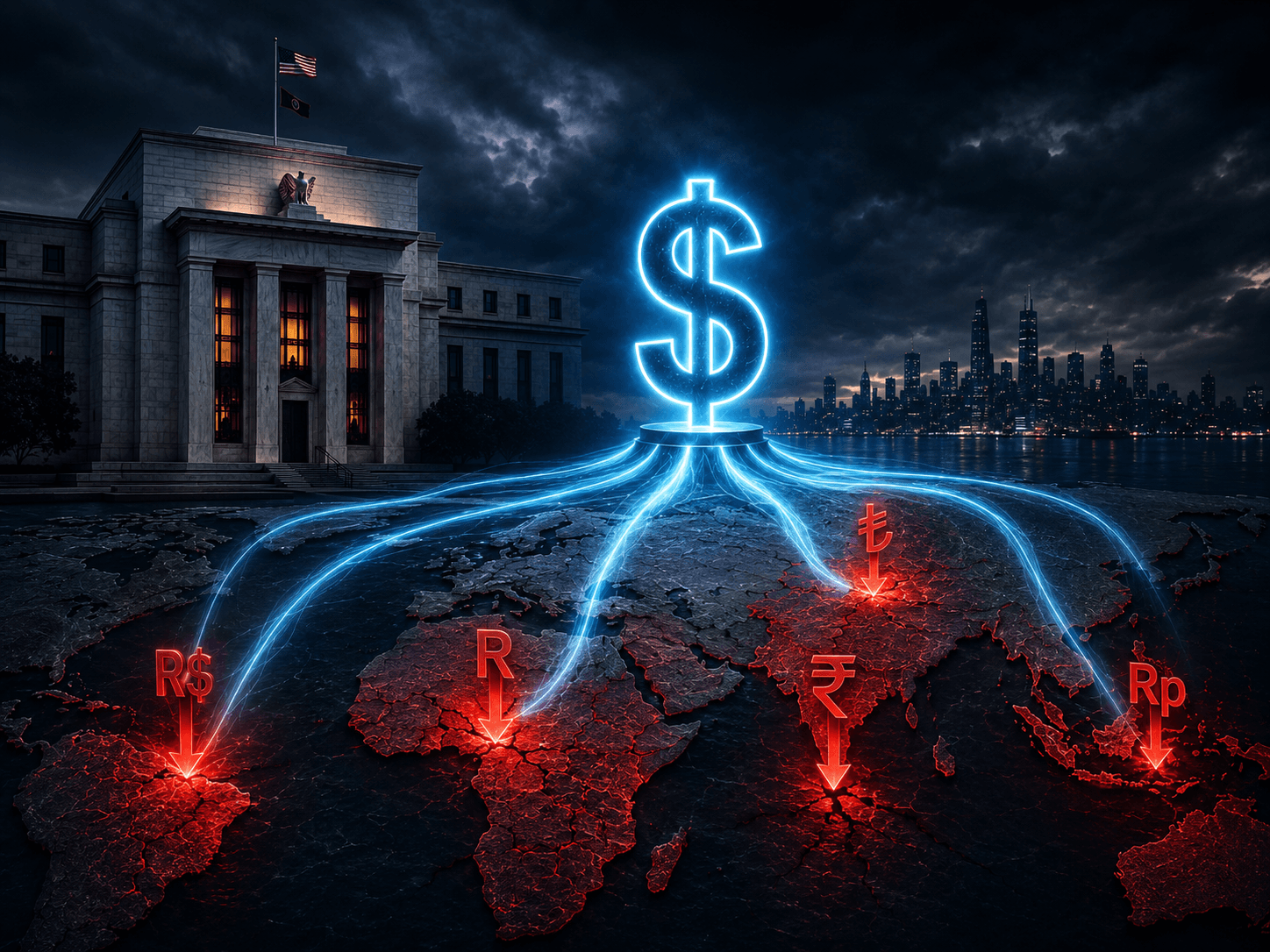
When the dollar strengthens, several things happen simultaneously across global markets. Commodity prices fall because commodities priced in dollars become more expensive for buyers holding other currencies, reducing demand. Emerging market currencies weaken because dollar-denominated debt becomes more expensive to service and capital flows back toward dollar assets. Risk appetite falls as investors prefer the safety and yield of dollar-denominated assets over higher-risk positions elsewhere.
When the dollar weakens, the reverse happens. Commodity prices rise. Emerging market currencies strengthen. Risk appetite improves. Gold tends to rise. AUD, NZD, and CAD typically benefit because their commodity exports become cheaper in dollar terms and demand increases.
None of this requires you to trade the dollar directly to be affected by it. These ripple effects touch every pair in every session, regardless of whether the dollar is named in the trade.
The economic calendar and dollar events
Because the dollar is central to everything, US economic releases move the entire forex market in a way that no other country's data can match. Non-Farm Payrolls, Federal Reserve rate decisions, CPI inflation data, GDP figures, and retail sales. Each of these lands and creates volatility across every major pair simultaneously, not just dollar pairs.
Checking the economic calendar before every trading session is standard practice at My Maa Markets. Clients have access to a full real-time economic calendar within the platform, including the market consensus forecast for every major release. When a significant US event is scheduled, that event affects your EUR/AUD position, your GBP/JPY position, and your AUD/CHF position. Every pair. Every time.
Understanding that the dollar sits underneath all of it is what makes that habit make sense rather than feeling like an arbitrary rule.
Practice reading dollar dynamics on a demo account
The best way to build an instinct for how dollar movements ripple through the market is to watch it happen in live conditions without real capital at stake. Open a demo account and on the day of a major US economic release, watch what happens simultaneously across EUR/USD, USD/JPY, AUD/USD, and a cross pair like EUR/AUD. Watch how they all move at the same moment in response to the same event.
Do this several times, and the dollar's structural role stops being a concept and becomes something you can feel in the market. That instinct, once built, makes you a better reader of every pair you ever trade, including the ones where the dollar never shows its name.
The dollar is not just a currency. It is the unit of account that the entire global financial system runs on. Every trade you place, on every pair, in every session, happens inside that system. Knowing it is there is the first step. Understanding how it moves is what actually helps.