


The allure of the financial markets is powerful. Stories of traders turning modest sums into fortunes can inspire anyone to try their hand at trading. However, one of the first and most practical questions that every aspiring trader asks is: "How much money do I actually need to start?" The answer isn't a single number; it's a balance of brokerage requirements, personal financial goals, and your appetite for risk.
This guide will provide a clear breakdown of the capital you need to begin your trading journey. We will explore minimum deposit requirements, the factors that should influence your starting capital, and practical steps you can take to trade effectively, even with a limited budget. Understanding these elements will empower you to start trading with confidence and a clear strategy for growth.
Understanding Minimum Deposit Requirements
The first hurdle to overcome is the minimum deposit required by your broker. This amount can vary significantly based on the broker, the type of account you open, and the assets you plan to trade.
Brokerage Minimums and Account Types
Brokers design different account types to cater to traders with varying levels of experience and capital. At My Maa Markets, for example, you can find a range of options tailored to your needs:
-
Standard Accounts: These are often the most accessible, designed for beginners. A Standard Account at My Maa Markets requires a minimum deposit of just $250, making it an excellent entry point for new traders.
-
Trader and Premium Accounts: As you gain experience, you might upgrade to an account that offers tighter spreads or more advanced features. These typically require a higher minimum deposit, such as $1,000 for a Trader Account or $5,000 for a Premium Account.
-
VIP Accounts: Reserved for high-volume, professional traders, these accounts offer the best trading conditions, like zero spreads, but require a substantial initial investment (e.g., $10,000 or more).
How Asset Classes Affect Minimums
The type of market you trade also influences capital requirements.
-
Forex: The foreign exchange market is known for its accessibility, with many brokers allowing you to start with a few hundred dollars. Leverage can enable you to control larger positions with a smaller initial outlay.
-
Stocks: Trading individual stocks often requires more capital, as you are purchasing shares outright. Without leverage, buying even a few shares of a high-priced stock like Amazon or Apple could require a significant investment.
-
Crypto: The cryptocurrency market is famously volatile. While you can buy fractions of a coin, the wild price swings mean that a small starting capital can be wiped out quickly.
Factors Influencing Your Starting Capital
Beyond the broker's minimum, the ideal starting capital is a personal figure. It depends on your unique financial situation and trading ambitions.
Financial Goals
What do you hope to achieve with trading?
-
Short-Term Gains: If your goal is to generate quick profits, you may need more capital to make trades that yield a meaningful return after accounting for spreads and fees.
-
Long-Term Growth: If you see trading as a way to grow wealth over time, you can start smaller and focus on compounding your profits.
Risk Tolerance
Your comfort with risk is a critical factor.
-
Conservative Style: A risk-averse trader might only risk 1% of their capital on a single trade. With a $500 account, that’s just $5 per trade, which may limit the opportunities you can take.
-
Aggressive Style: A trader willing to take on more risk might be comfortable risking 3-5% per trade, allowing for potentially larger gains (and losses) with the same capital.
A fundamental rule is to only trade with capital you can afford to lose. Never invest money that is essential for your living expenses, like rent or bills.
Trading Strategy
Different strategies have different capital needs.
-
Scalping: This high-frequency strategy involves making dozens of small trades to capture tiny price movements. It often requires more capital to generate significant profits and cover transaction costs.
-
Day Trading: Day traders open and close positions within a single day. They need enough capital to withstand intraday volatility without receiving a margin call.
-
Swing Trading: This strategy involves holding positions for several days or weeks. It can often be done with less capital, as trades are less frequent and can be planned with wider stop-loss orders.
Practical Recommendations for Starting Your Journey
Once you have a clear picture of your goals and risk tolerance, you can begin to build your trading plan.
Start with a Demo Account
Before risking any real money, practice on a demo account. Reputable brokers like My Maa Markets offer free demo accounts that simulate real market conditions. This allows you to test your strategies, learn the platform, and build confidence without any financial risk.
The Power of Leverage and Compounding
-
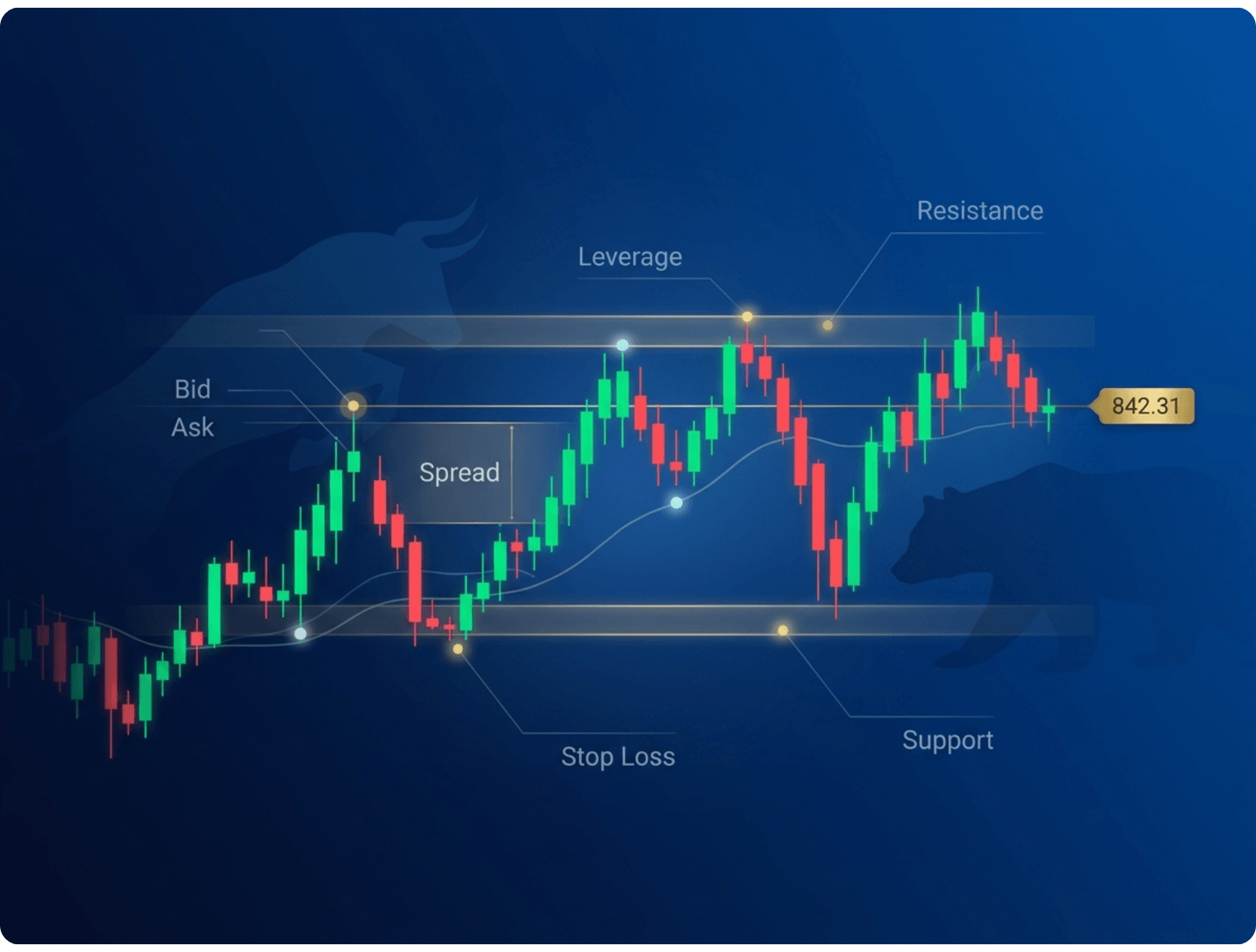
Leverage: Leverage allows you to control a larger position with a smaller amount of capital. For example, with 1:500 leverage, a $100 deposit can control a $50,000 position. While this amplifies potential profits, it also magnifies losses. It is a powerful tool that must be used with caution.
-
Compounding: One of the most effective ways to grow a small account is by reinvesting your profits. Consistently adding your earnings back into your trading capital creates an exponential growth curve, turning a small starting sum into a substantial amount over time.
Case Studies: Real-World Examples
Many successful traders started small. Consider a trader who begins with $500. By risking only 1% ($5) per trade and aiming for a risk-to-reward ratio of 1:2, they target a $10 profit on each winning trade. With a consistent strategy and a 50% win rate, they can steadily grow their account through compounding.
However, common pitfalls can derail progress. One of the biggest mistakes is overleveraging a small account. A single bad trade can wipe out a significant portion of your capital, making it difficult to recover. Another error is "revenge trading"—trying to win back losses with impulsive, high-risk trades.
Regulatory and Safety Considerations
Your capital's safety should be your top priority. Always choose a regulated broker. My Maa Markets is regulated by the Financial Services Commission (FSC), which ensures that your funds are protected and that the broker adheres to strict standards of conduct.
Effective risk management is non-negotiable. Always use stop-loss orders to define the maximum amount you are willing to lose on a trade. This protects your capital from catastrophic losses during unexpected market moves.
Your Path to Trading Success Starts Here
So, how much money do you need to start trading? While you can open an account with as little as $250, a more realistic starting figure for many new traders is between $500 and $1,000. This amount provides enough flexibility to manage risk effectively while pursuing meaningful trades.
Ultimately, the most important investment you can make is in your education. Take advantage of resources like online courses, webinars, and trading communities. Start with a demo account to build your skills, and when you are ready, begin with an amount you are comfortable losing. With discipline, a solid strategy, and a trusted broker like My Maa Markets, you can embark on your trading journey with the best possible foundation for success.